Procedures
Partial Knee Replacement in Doha
Quick answer
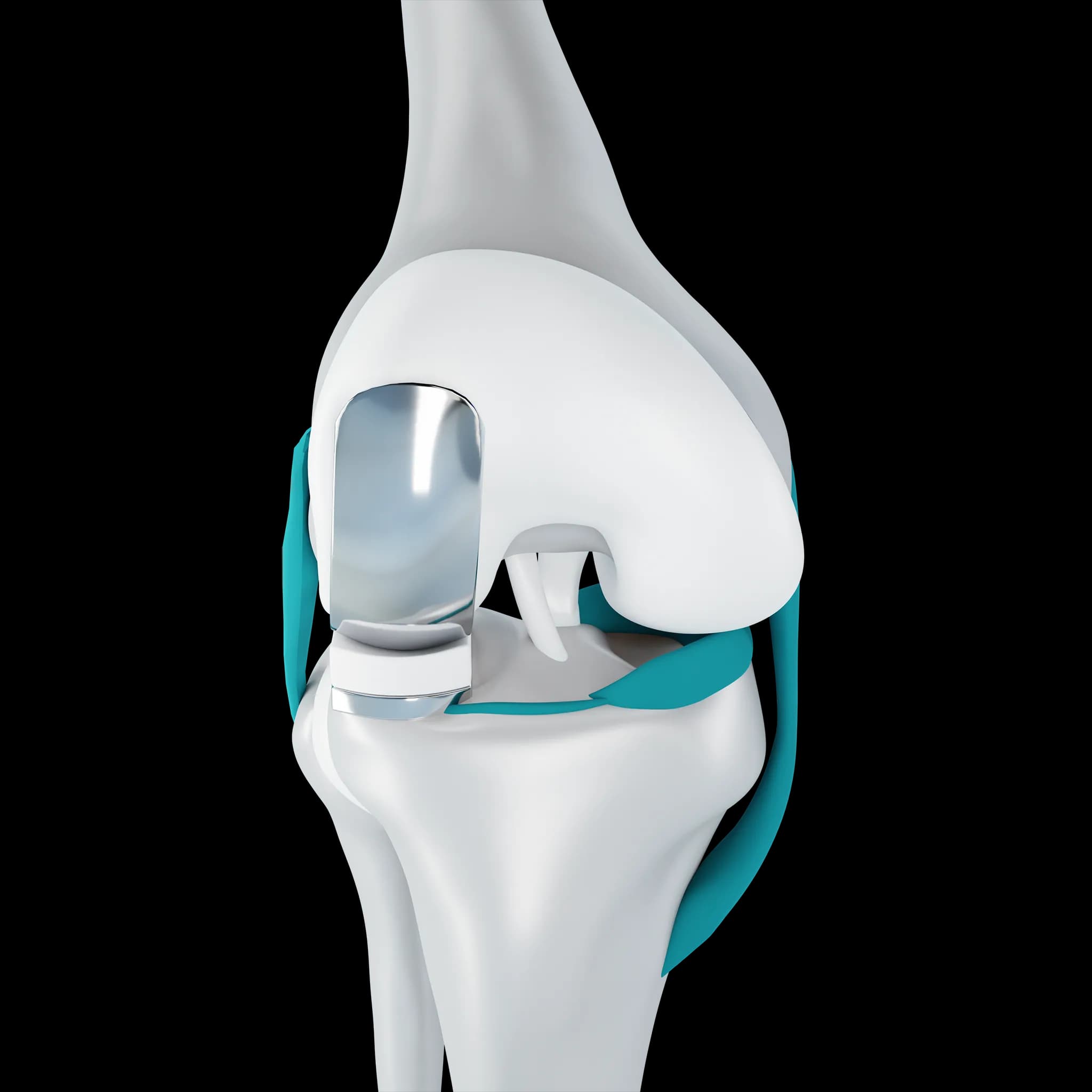
A partial knee replacement resurfaces only the worn part of the knee, usually the inner side, and keeps the healthy cartilage and ligaments. Suitable patients often recover faster and say the knee feels more natural than after a total replacement, explains Dr. Pablo Gelber, knee surgeon at Aman Hospital in Doha, Qatar.
What is a partial knee replacement?
The knee has three compartments: the inner (medial), the outer (lateral) and the joint behind the kneecap (patellofemoral). Arthritis often starts in just one of them, most commonly the inner side. A partial knee replacement, also called a unicompartmental or uni knee replacement, replaces the damaged surfaces of that one compartment with metal and a plastic bearing, leaving the rest of the knee untouched.
Because the cruciate ligaments and the healthy compartments are preserved, the knee keeps more of its natural movement and feel. A patellofemoral replacement, for arthritis limited to the kneecap joint, is a less common type of partial replacement.
Who is suitable?
- Arthritis confined to one compartment, confirmed on X-ray and examination
- Pain located mainly on that side of the knee
- A functioning ACL in most designs
- Good range of movement and a deformity that corrects easily
- No inflammatory arthritis such as rheumatoid arthritis
Age alone is not a barrier, and partial replacement suits both active patients in their fifties and older patients who benefit from a smaller operation. Patients with arthritis in more than one compartment, significant stiffness or ligament damage are usually better served by a total knee replacement or, in younger patients with good cartilage elsewhere, an osteotomy.
Assessment
Assessment includes a careful examination, weight-bearing X-rays and often stress X-rays, which show whether the other compartments are preserved. An MRI may be used in borderline cases. It is important that symptoms match the worn compartment: pain spread across the whole knee or behind the kneecap may point to a problem a partial replacement would not address.
The operation
The operation is performed through a smaller incision than a total replacement, under spinal or general anaesthesia. The damaged cartilage and a thin layer of bone are removed from the worn compartment, and the implant components are fitted precisely. Many patients walk on the day of surgery or the next day, and hospital stays are often short, in some cases one or two nights. Blood loss and early pain are usually less than with a total replacement.
Recovery
- Walking with a frame or crutches from the first day, progressing to a stick within a few weeks
- Physiotherapy to restore bending, straightening and strength
- Driving often after about four to six weeks, once you can control the leg safely
- Desk work at around four to six weeks; more physical work later
- Most patients feel steady progress over three months, with continued improvement up to a year
Low-impact activities such as walking, swimming, cycling and golf are generally encouraged. Many patients find kneeling and floor sitting easier than after a total replacement, although this varies and kneeling may remain uncomfortable for some.
Benefits and risks
Compared with a total replacement, partial replacement in suitable patients often means a quicker recovery, better bending and a more natural feeling knee. The trade-off is a higher chance of needing further surgery later, mainly because arthritis can progress in the other compartments or the implant can loosen. If that happens, conversion to a total knee replacement is usually possible.
Other risks are those of any joint replacement: infection, blood clots, stiffness, persistent pain, and rarely nerve or vessel injury. Careful patient selection is the most important factor in a good result.
Choosing the right operation in Doha
Not everyone with arthritis on one side is a candidate, and not every knee replacement needs to be a total one. Dr. Gelber assesses each compartment at Aman Hospital in Doha and explains whether non-surgical treatment, osteotomy, partial replacement or total replacement fits your knee. Cost depends on the procedure, implant and hospital stay, and coverage varies by policy, so check with Aman Hospital and your insurer.
Frequently asked questions
How long does a partial knee replacement last?
Many partial replacements function well for many years. On average they are somewhat more likely than total replacements to need revision in the long term, which is part of the discussion when choosing between them.
Is a partial knee replacement less painful?
Early pain is usually less than after a total replacement because the operation is smaller, and recovery is often quicker. You will still need pain relief and physiotherapy in the first weeks.
Can I travel home after surgery?
Long flights increase the risk of blood clots after joint replacement. Most surgeons advise waiting several weeks before a long-haul flight, using clot prevention as instructed, and moving regularly during the journey.
Glossary
Patients also ask
- Am I too young, too old or too heavy for a partial knee replacement?
- When can I fly home after a partial knee replacement in Qatar?
- How long does a partial knee replacement last, and what can go wrong?
- How do I protect the rest of my knee after a partial knee replacement?
- Can I kneel, pray and sit on the floor after a partial knee replacement?
- Only the inside of my knee is worn. Do I really need a full replacement?
- Is a partial knee replacement just a temporary fix? Common myths answered
- How long does it take to recover from a partial knee replacement?
- Partial vs total knee replacement: what is the difference?
- Can I go back to padel, golf or the gym after a partial knee replacement?
- What affects the cost of a partial knee replacement in Qatar, and will insurance cover it?
- What does arthritis on just one side of the knee feel like?
- What happens on the day of a partial knee replacement operation?
- What is a partial knee replacement?
- When should I see a surgeon to ask about a partial knee replacement?
- Why does arthritis wear out only one side of the knee?
Related
