Procedures
Knee Replacement Surgery in Doha
Quick answer
Knee replacement replaces the worn surfaces of an arthritic knee with metal and plastic components to relieve pain and restore movement. A partial replacement treats one worn compartment; a total replacement treats the whole joint. Dr. Pablo Gelber performs knee replacement at Aman Hospital in Doha when non-surgical treatment no longer controls the pain.
Who knee replacement is for
Knee replacement is considered for people with advanced knee arthritis whose pain and stiffness limit walking, sleep, prayer or daily activities despite non-surgical treatment such as exercise, weight management, painkillers and injections. X-rays usually show significant loss of joint space.
There is no fixed age for a knee replacement. The decision is based on how much the knee affects your life, your general health and what you hope to do afterwards.
Partial or total knee replacement
The knee has three compartments: inner, outer and behind the kneecap.
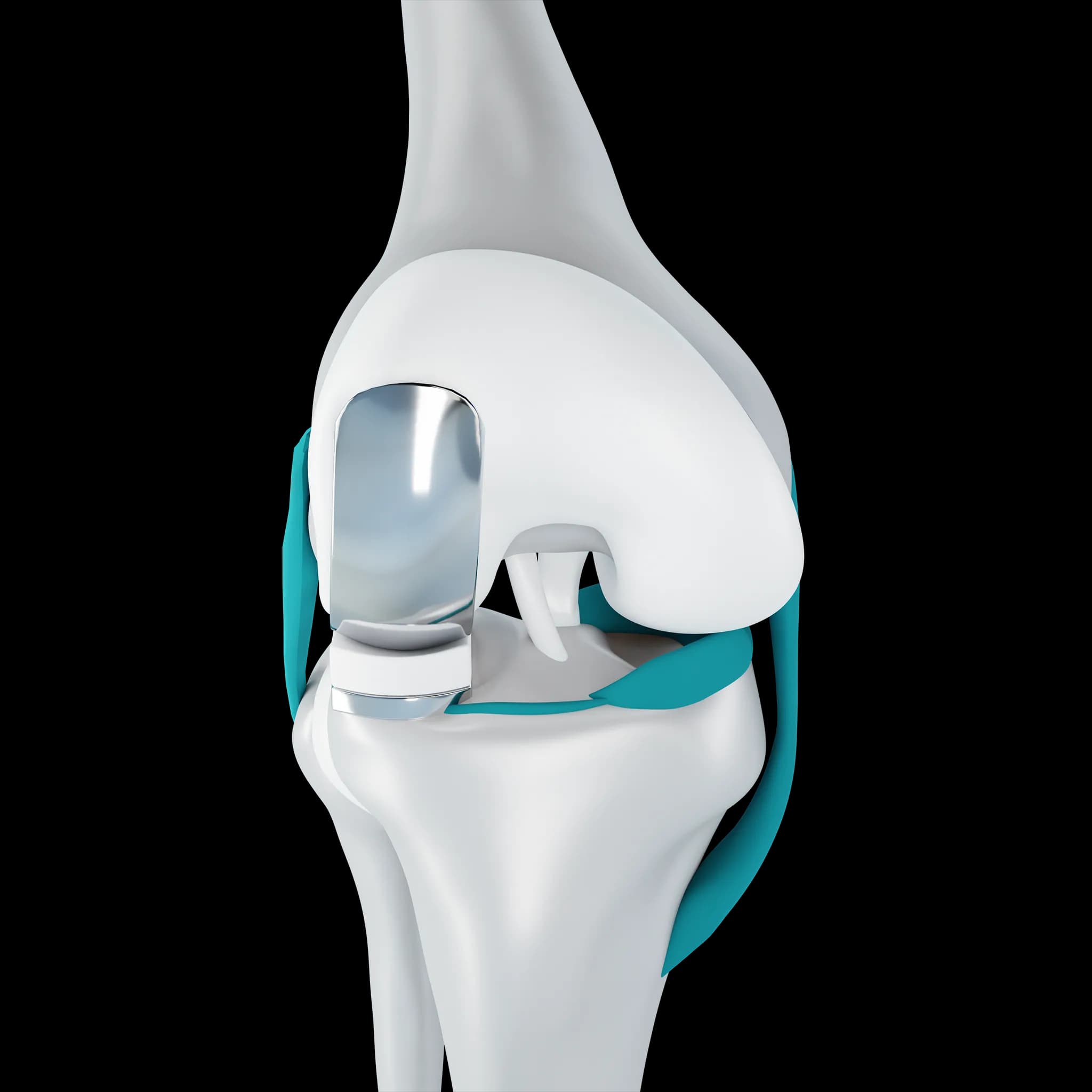
- Partial (unicompartmental) replacement resurfaces only the worn compartment, usually the inner side, and keeps the healthy parts and ligaments. It is suitable when arthritis is limited to one area and the ligaments are intact, and recovery is often quicker
- Total knee replacement resurfaces the whole joint and is used when arthritis affects more than one compartment or the knee is badly deformed
Dr. Gelber recommends one or the other based on your examination, X-rays and, when needed, an MRI.
How the operation is done
The operation is performed under spinal or general anaesthesia, usually with a nerve block or local anaesthetic around the knee for pain relief. Through an incision at the front of the knee, the worn surfaces of the thigh bone and shin bone are shaped precisely and covered with metal components, with a plastic insert between them that acts as a new gliding surface. The ligaments are balanced so the knee is stable through its range of movement.
Hospital stay at Aman Hospital
You will be asked to fast for several hours before surgery, and you meet the anaesthetist and surgical team on admission. Physiotherapy usually starts on the day of surgery or the next day, getting you standing and walking with a frame or crutches. The hospital stay is usually a few days, until you can walk safely, manage stairs if needed and your pain is controlled with tablets.
Recovery
- Walking with support the day after surgery
- Hospital stay usually of a few days
- Driving and most daily activities at around six weeks
- Continued improvement for up to a year
Regular exercises at home and with a physiotherapist are essential in the first three months to recover bending and straightening. Swelling and warmth around the knee can persist for several months, which is normal.
Risks
Knee replacement is a well-established operation that relieves pain for most patients. As with any major surgery there are risks, which Dr. Gelber explains before you consent:
- Blood clots in the leg, reduced with medication and early walking
- Infection, which is uncommon but serious, so precautions are taken before, during and after surgery
- Stiffness, usually improved with physiotherapy
- Persisting pain or a feeling that the knee is not fully natural in some patients
- Wear or loosening of the components over many years, which may need revision surgery
Preparing for surgery in Doha
- Bring recent X-rays, any MRI scans and a list of your medicines
- Insurance pre-approval may be needed, so check with your insurer before booking
- Medical conditions such as diabetes, high blood pressure or anaemia should be well controlled before surgery
- Prepare your home: a chair with arms, a raised toilet seat and clear walkways help
- Arrange help at home for the first weeks after discharge
Frequently asked questions
How long does a knee replacement last?
Modern knee replacements usually last many years. How long depends on factors such as your activity level, weight and age at the time of surgery. Dr. Gelber discusses what to expect in your case.
Will I be able to pray and kneel after a knee replacement?
Many patients can kneel after recovery, although some find it uncomfortable. Very deep bending, such as sitting on the floor, may remain limited. Praying on a chair is an option while you recover.
Should I have a partial or a total knee replacement?
A partial replacement is suitable when arthritis is limited to one part of the knee and the ligaments are healthy. A total replacement is used when the arthritis is more widespread. The choice depends on your examination and X-rays.
Related