Conditions
ACL Tear Treatment in Doha
Quick answer
An ACL tear is a rupture of the anterior cruciate ligament, the main stabilising ligament of the knee, usually caused by a twisting or pivoting injury in sports like football or padel. In Doha, Dr. Pablo Gelber at Aman Hospital assesses ACL tears and offers rehabilitation or ACL reconstruction depending on your knee, sport and goals.
What is the ACL?
The anterior cruciate ligament (ACL) runs through the centre of the knee, connecting the thigh bone (femur) to the shin bone (tibia). It stops the shin bone sliding forwards and controls rotation, which is why it matters so much in sports that involve cutting, jumping and changing direction.
A tear can be partial or complete. A complete tear usually does not heal back together on its own, because the ligament sits in the joint fluid and its torn ends pull apart.
Symptoms
- A pop or tearing sensation at the moment of injury
- Swelling within a few hours
- The knee feeling unstable or giving way when turning
- Difficulty returning to sport
Causes and who gets it
Most ACL tears happen without contact: planting the foot and twisting, landing awkwardly from a jump, or stopping suddenly. A direct blow to the knee, for example in a tackle, can also tear it.
In Qatar, football is a common cause, along with padel, basketball and other court sports where quick changes of direction are constant. Women and girls who play pivoting sports have a higher risk than men, partly because of differences in landing mechanics and muscle control. Fatigue and a poor warm-up may add to the risk.
Diagnosis
Diagnosis combines a careful examination (Lachman and pivot-shift tests) with an MRI scan, which also shows associated meniscus or cartilage damage. That damage is common and changes the treatment plan.
Treatment options
Not every ACL tear needs surgery. Less active patients can do well with a structured physiotherapy programme.
For people who want to return to pivoting sports, or whose knee keeps giving way, ACL reconstruction restores stability and protects the meniscus and cartilage from further injury.
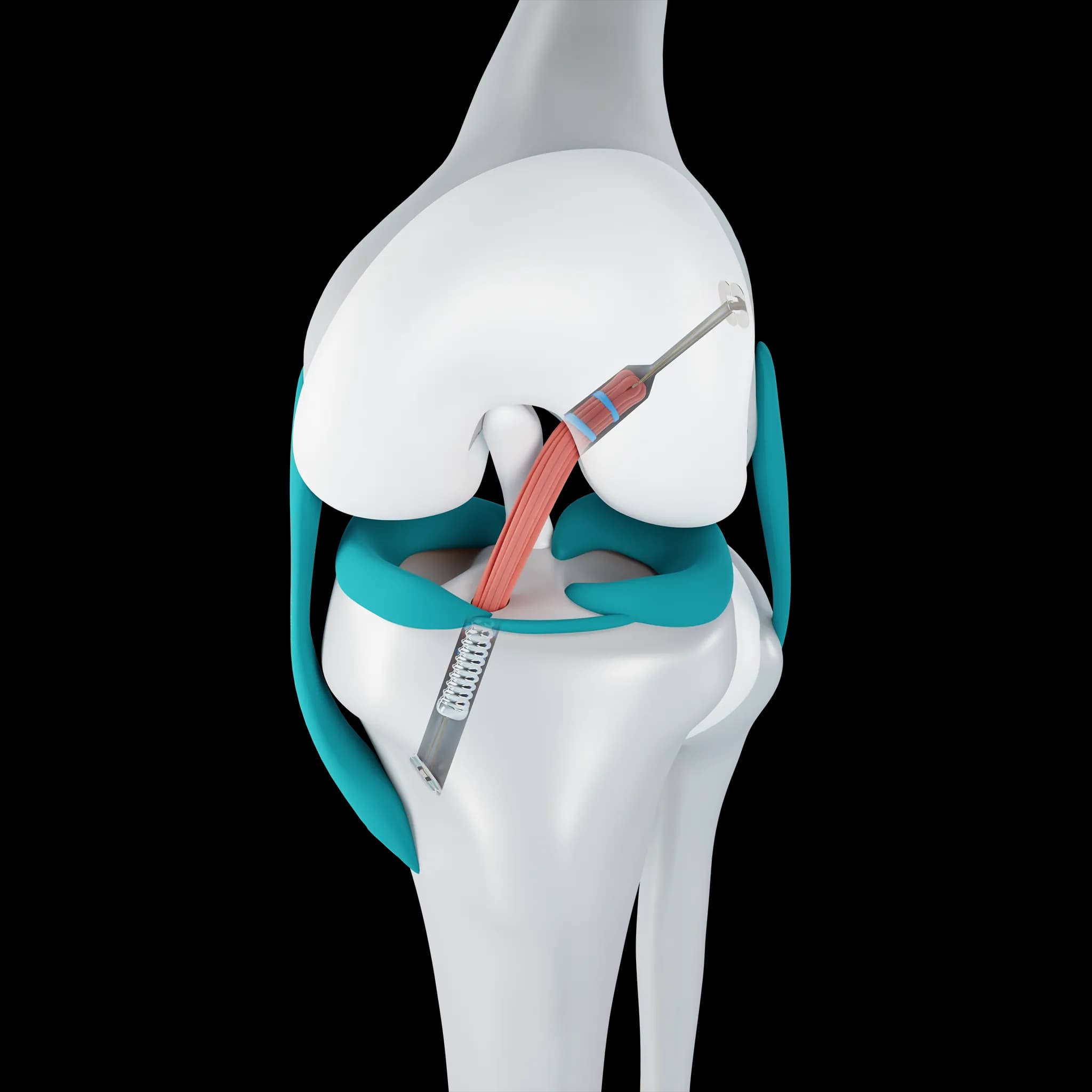
Reconstruction replaces the torn ligament with a tendon graft, usually taken from the patient's own hamstring, patellar or quadriceps tendon, and is performed arthroscopically through small incisions. Surgery is usually planned once the swelling has settled and the knee moves well. Whatever the decision, physiotherapy to restore movement and quadriceps strength is the foundation of treatment.
Recovery and outlook
After reconstruction, most patients use crutches for the first days to weeks, return to desk work within a few weeks and begin straight-line running at around three to four months. Return to football, padel and other pivoting sports is usually at around 9 to 12 months, once strength and functional tests are passed.
Many patients return to their previous sport, but rehabilitation takes commitment. During the Doha summer, training is usually moved indoors or to the cooler early-morning and evening hours.
When to see a knee specialist in Doha
- You felt a pop and the knee swelled within hours of a twisting injury
- The knee gives way when you turn or change direction
- You cannot fully straighten the knee, which may mean a torn meniscus is blocking it
- You want a clear plan before returning to football or padel
Dr. Gelber sees patients at Aman Hospital in Doha. An early assessment helps protect the meniscus and cartilage while a treatment plan is agreed.
Frequently asked questions
Can you walk with a torn ACL?
Often yes, once the initial swelling settles, but the knee may give way with twisting movements, which risks further damage to the meniscus and cartilage.
Is ACL surgery always necessary?
No. The decision depends on your activity level, knee instability, age and associated injuries. Dr. Gelber discusses both surgical and non-surgical options.
How soon after an ACL tear should I have surgery?
There is usually no need to operate in the first days. Surgery is commonly planned once swelling has settled and the knee bends and straightens well, often within a few weeks. A locked knee or a repairable meniscus tear can make earlier surgery sensible.
Can ACL tears be prevented?
Not completely, but neuromuscular warm-up programmes that train landing, balance and hamstring strength have been shown to lower the risk of ACL injury in football players. They take around 15 to 20 minutes and fit into regular training.
Related
 ProceduresACL Reconstruction Surgery in Doha
 ProceduresRevision ACL Surgery in Doha
- ArticleACL Surgery Recovery Timeline: Week by Week
 ConditionsMeniscus Tear Treatment in Doha
- ArticleACL Injury Prevention in Football: Warm-Ups, Technique and What to Do After an Injury
- ArticlePadel Knee Injuries: Causes, Warning Signs and Prevention
- ArticleKnee Pain: When Do You Need an MRI?