Conditions
Kneecap Dislocation and Patellar Instability in Doha
Quick answer
Patellar instability means the kneecap slips partly or fully out of its groove, most often in teenagers and young adults. After a first dislocation, many patients recover with physiotherapy; if the kneecap keeps dislocating, Dr. Pablo Gelber in Doha may recommend MPFL reconstruction or realignment surgery to stabilise it.
What is patellar instability?
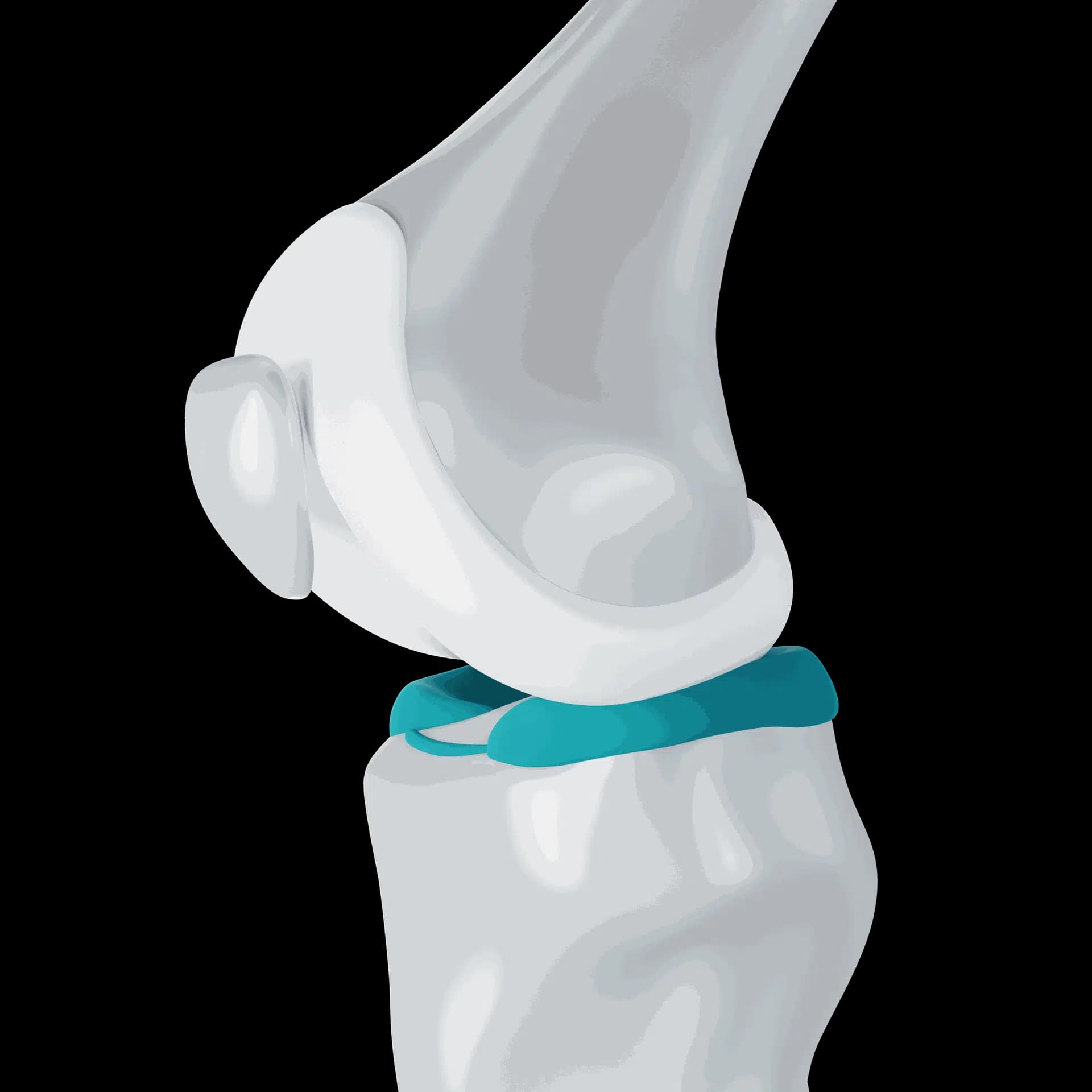
The kneecap (patella) sits in a groove at the front of the thigh bone, called the trochlea, and glides up and down as the knee bends. The medial patellofemoral ligament (MPFL) on the inner side is the main restraint that stops it slipping outwards.
In a dislocation, the kneecap comes fully out of the groove, usually towards the outer side, and the MPFL is usually torn. A subluxation is a partial slip where the kneecap moves out and returns on its own.
Symptoms
- The kneecap visibly shifting to the outer side of the knee
- Sudden pain and the knee giving way, often during a twist
- Rapid swelling after a dislocation
- Apprehension when the kneecap is pushed outwards
- Pain at the front of the knee and a feeling that the kneecap is not tracking normally
Why it happens
Risk factors include a shallow groove (trochlear dysplasia), a high-riding kneecap and ligament laxity. An MRI and CT assessment identify which factors are present so surgery can address the cause.
A first dislocation often happens during sport, when the foot is planted and the body turns, for example in football, basketball, padel or dance. The risk of it happening again is higher in younger patients and in those with these anatomical risk factors.
Diagnosis
Examination assesses how the kneecap moves, apprehension, leg alignment and ligament laxity. X-rays check for small fragments of bone broken off during the dislocation. MRI shows the MPFL tear and any cartilage injury, and measurements on MRI or CT, such as groove depth, kneecap height and the position of the tibial tubercle, help guide treatment.
Treatment options
After a first dislocation without a significant cartilage injury or loose fragment, treatment is usually non-surgical: a short period of protection, then physiotherapy focused on quadriceps and hip strength, balance and a gradual return to sport.
Surgery is considered when the kneecap keeps dislocating, or when a loose fragment of cartilage or bone needs to be fixed or removed. The options include:
- MPFL reconstruction, which replaces the torn ligament with a tendon graft
- Tibial tubercle osteotomy, which realigns the kneecap's track when the tendon attachment sits too far to the outer side or the kneecap rides too high
- Trochleoplasty, which deepens a very shallow groove in selected cases
- Arthroscopy to remove or fix loose fragments
Recovery and outlook
After physiotherapy alone, many patients return to sport within about three months once strength and control have recovered. After MPFL reconstruction, return to sport is commonly at around four to six months; after an osteotomy, recovery is usually longer because the bone needs to heal.
In teenagers who are still growing, the surgical technique is adapted to protect the growth plates.
When to see a knee specialist in Doha
- Your kneecap has dislocated, even if it went back in by itself
- The knee swelled quickly after the kneecap slipped, which may mean a cartilage or bone fragment
- The kneecap has dislocated more than once
- Fear of the kneecap slipping is stopping you from sport or daily activities
A first dislocation should be assessed with imaging to check for loose fragments. Dr. Gelber assesses kneecap instability at Aman Hospital in Doha.
Frequently asked questions
Will my kneecap dislocate again?
Some patients never dislocate again after physiotherapy, while others have repeated episodes. The risk is higher in younger patients and when there is a shallow groove, a high-riding kneecap or loose ligaments, which is why imaging helps guide the decision.
What should I do if my kneecap dislocates?
Often the kneecap goes back in on its own as the knee straightens. If it stays out, seek emergency care rather than forcing it. Afterwards, the knee should be assessed with imaging even if it feels better.
What is MPFL reconstruction?
It is an operation that replaces the torn medial patellofemoral ligament with a tendon graft, restoring the main restraint that stops the kneecap slipping outwards. It may be combined with realignment when the shape of the bones contributes to the instability.
Related