Conditions
Bone Bruise in the Knee: What It Means on Your MRI

Quick answer
A bone bruise is an injury inside the bone beneath the cartilage, seen on MRI as bone marrow oedema, usually after a twist, fall or direct blow. Most heal with time and sensible loading over weeks to a few months, but the injury that caused it often matters more, explains Dr. Pablo Gelber, knee surgeon at Aman Hospital in Doha, Qatar.
What is a bone bruise?
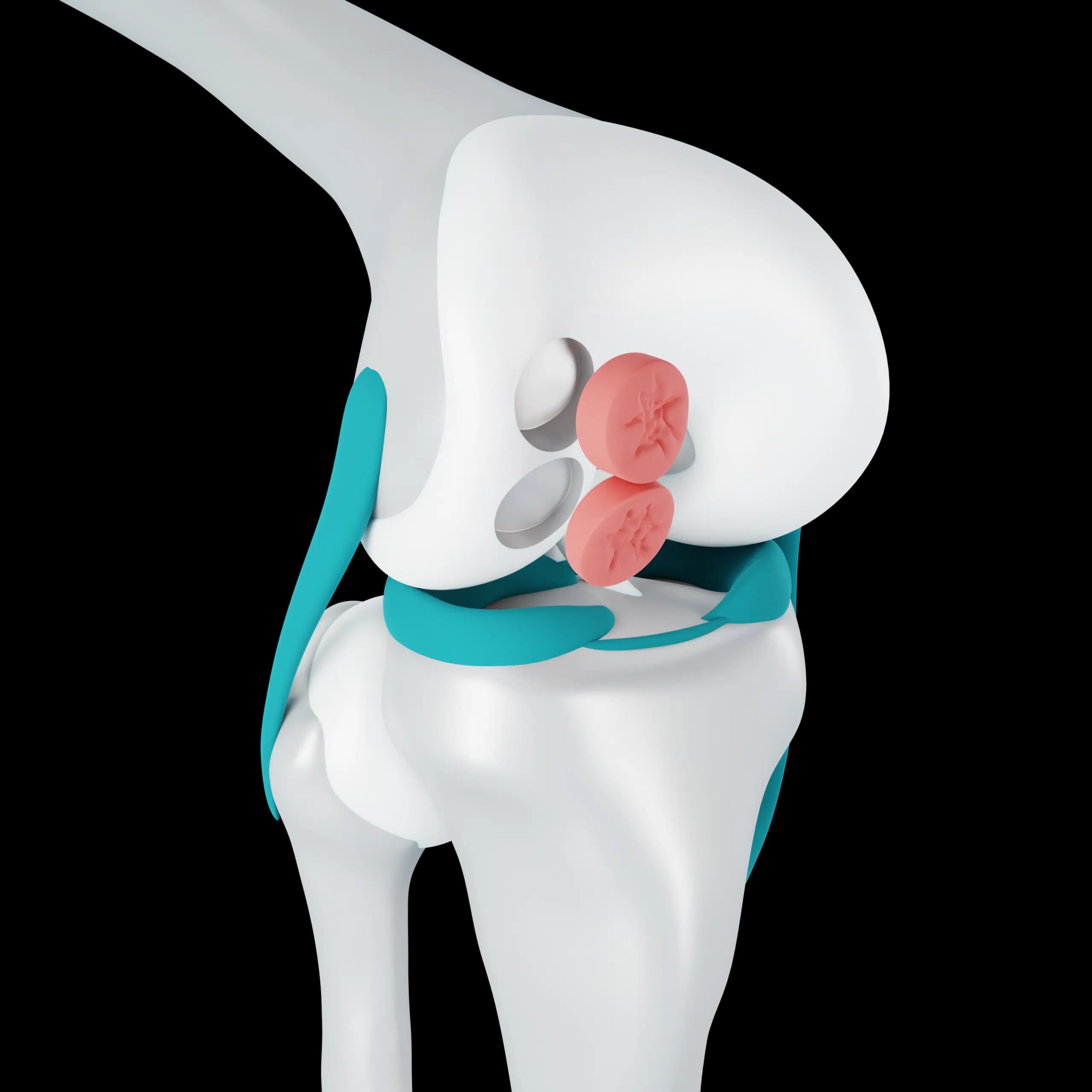
Bone is not solid all the way through. Inside the hard outer shell is a honeycomb of fine bone struts filled with marrow. A strong impact can cause tiny breaks in those struts with bleeding and swelling inside the bone, without a visible fracture line. This is a bone bruise, also called a bone contusion or, on an MRI report, bone marrow oedema.
Bone bruises do not show on ordinary X-rays. They are found on MRI, often when the scan is done to check for ligament or meniscus damage.
Symptoms in patients' own words
- "It's a deep ache inside the knee, not on the skin"
- "It hurts when I put weight on it or go down stairs"
- "The knee swelled after I twisted it"
- "It throbs at night after a busy day"
- "There's one spot on the bone that's really tender"
Symptoms are often worse than people expect for an injury that does not show on X-ray, and they can linger after the swelling has gone.
Causes and what the pattern tells us
The location of a bone bruise on MRI is a clue to how the knee was injured.
- A twisting injury that tears the ACL often leaves matching bruises on the outer thigh bone and the back of the outer shin bone, where they knocked together as the knee shifted
- A kneecap dislocation often leaves bruises on the inner kneecap and the outer thigh bone
- A direct blow, such as a fall onto the knee or a dashboard injury in a car accident, leaves a bruise where it struck
- Hard landings from jumps can bruise the weight-bearing surfaces
In Qatar we commonly see bone bruises after football and padel twists, basketball landings, falls in the gym and road accidents. Bone marrow oedema can also appear without a clear injury, in osteoarthritis, after overuse, or with a small insufficiency fracture in older adults, so the story and examination matter.
Diagnosis
Dr. Gelber examines the knee for swelling, tenderness and ligament stability, and reviews your MRI himself rather than relying only on the report. The key questions are whether there is an associated ACL, meniscus, collateral ligament or cartilage injury, and whether the cartilage over the bruise is intact. X-rays may be taken to rule out a fracture. If the bruise has no clear injury behind it, blood tests including vitamin D and bone health may be considered.
Treatment
An isolated bone bruise is treated without surgery. The bone needs time and a manageable load to heal.
- Relative rest and activity modification, avoiding running, jumping and twisting while it is painful
- Crutches for a short period if walking is painful, then gradual return to full weight
- Ice and anti-inflammatory or pain medicines when suitable for you
- Physiotherapy to maintain movement and rebuild muscle strength
- Low-impact fitness such as cycling or swimming as pain allows
When the bone bruise comes with a torn ligament or meniscus, the treatment plan is shaped by that injury. Surgery, such as ACL reconstruction or meniscus repair, is for the associated damage, not for the bruise itself. A large bruise is one of the reasons the knee is sometimes allowed to settle before surgery.
Recovery and return to sport
Pain from a bone bruise usually settles over several weeks, while the changes on MRI can take a few months or longer to fade. Return to running and sport is guided by symptoms: walking without a limp, no pain with daily activities, full movement and good strength. Pushing back to football or padel too early can prolong the pain.
A severe bone bruise can be a marker of significant impact to the cartilage, so a few patients develop cartilage problems later. Follow-up is advised if pain persists.
When to see a specialist in Doha
See a knee specialist if your knee swelled after an injury, if you cannot put full weight on it, if it gives way or locks, or if an MRI mentions bone bruising alongside other findings. Seek urgent care if you cannot bear weight at all, the knee looks deformed, or the leg below is numb or cold. Dr. Gelber sees knee injuries at Aman Hospital in Doha.
Frequently asked questions
Is a bone bruise worse than a fracture?
It is a milder injury than a fracture through the bone, but it can be just as painful and take weeks to months to settle. It also often signals that the knee took a hard impact, so associated injuries should be checked.
Can I walk on a bone bruise in my knee?
Usually yes, as pain allows. If walking is painful or you limp, crutches for a short period help, followed by a gradual return to full weight.
Why is my knee still sore months after a bone bruise?
Some bone bruises take longer to heal, especially large ones or when activity was resumed early. Persistent pain should be reassessed to look for cartilage or meniscus damage that was missed or has developed.
Glossary
Patients also ask
- Bone bruise or fracture: what is the difference in the knee?
- Does a bone bruise mean I tore my ACL?
- How long does a bone bruise in the knee take to heal?
- I stand all day at work. How do I manage a knee bone bruise?
- My knee still aches weeks after a fall, but the X-ray was normal. Why?
- The MRI says bone bruise. What does that mean?
- When can I play football or padel again after a knee bone bruise?
Related