Conditions
Knee Pain in Children and Teenagers

Quick answer
Most knee pain in active children and teenagers comes from growth-related overload, such as Osgood-Schlatter disease, and settles with activity changes. A limp, swelling without injury, fever or pain that wakes a child at night needs prompt assessment, because the hip, an infection or a joint injury can be responsible, advises Dr. Pablo Gelber, knee surgeon in Doha.
Why growing knees hurt
Children's bones grow from growth plates, areas of softer cartilage near the ends of the bones. Around the knee, tendons attach close to these growth areas. During growth spurts, the bones lengthen faster than the muscles and tendons adapt, so the pull on these attachment points increases. Add football practice, academy training, basketball or gymnastics several times a week and the knee can become sore.
These overload conditions are common, rarely cause lasting harm and usually settle as growth slows. A smaller group of children has a joint problem, such as an injury to a ligament or meniscus, a cartilage lesion or a kneecap that slips out, and these need a specific diagnosis.
Common causes by age and activity
- Osgood-Schlatter disease: a tender, sometimes prominent bump just below the kneecap, typically in active children around the growth spurt, sore with running, jumping and kneeling
- Sinding-Larsen-Johansson syndrome: a similar problem at the lower tip of the kneecap, usually a little earlier in childhood
- Patellofemoral pain: an ache around the kneecap, common in teenage girls and young athletes, worse on stairs and after sitting
- Kneecap instability: the kneecap slips out sideways, often with a fall and swelling, more common in children with flexible joints
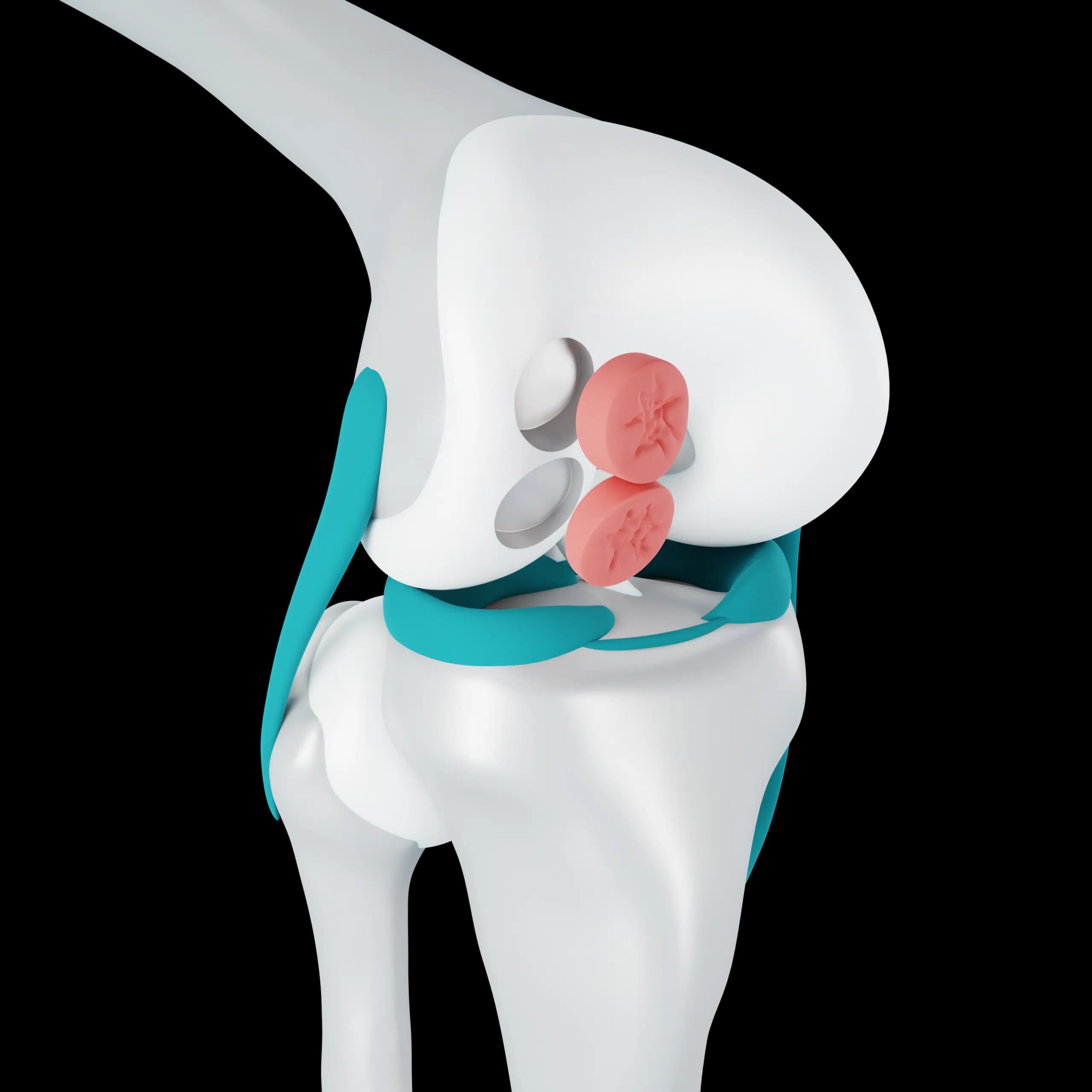
- Osteochondritis dissecans (OCD): a patch of bone and cartilage that loses its blood supply, causing vague pain, swelling or catching
- Discoid meniscus: an abnormally shaped meniscus that can click, snap or lock, often on the outer side
- ACL and meniscus tears: now seen more often in teenage athletes after a twist or awkward landing
- Growing pains: an evening ache in both legs, usually in younger children, with normal walking and no swelling
Red flags parents should know
- A limp, or the child refuses to walk or put weight on the leg
- A hot, red, swollen joint with fever, or a child who seems unwell: possible infection, call 999 or go to an emergency department
- Knee or thigh pain with a limp in a child or teenager, especially if overweight: the hip must be checked the same day for a slipped growth plate (SCFE)
- Swelling after a twist or landing, or a knee that locks or gives way
- Pain that wakes the child at night in one leg, or a new lump around the knee
- Several swollen joints, morning stiffness or a rash, which can point to juvenile arthritis
These situations are uncommon, but they should not be treated as growing pains.
How children's knee pain is assessed
Dr. Gelber talks to the child as well as the parent, because children describe their pain in their own way, often by pointing. He asks about sport, training load and any growth spurt, then examines both knees and always the hips. Watching the child walk, squat and hop gives a lot of information.
X-rays are often taken in children, because growth plates and many bone problems show well on them. MRI is used for suspected OCD, discoid meniscus, ligament injury or unexplained swelling. Blood tests are added if infection or inflammatory arthritis is possible.
Treatment: mostly activity changes and strength
For overload conditions, the aim is to keep the child active while reducing the load that hurts. That may mean fewer sessions a week, a break from jumping or sprinting, or a different position in the team for a few weeks, combined with stretching and strengthening guided by a physiotherapist. Ice after sport can ease soreness. Most children can keep playing at a lower level if the pain stays mild.
A small number need more. Kneecap dislocations, larger OCD lesions, symptomatic discoid menisci and ligament or meniscus tears may need surgery, using techniques that respect the growth plates. Decisions are made with the family, weighing the child's age, remaining growth and goals.
Sport and school life in Qatar
Many children in Qatar train in academies year-round, sometimes in more than one sport. Rest weeks and variety protect growing knees. In the summer, indoor sessions and good hydration help, and in Ramadan older children who are fasting may need lighter training. If school sports or kneeling for prayer hurt, a short adjustment and a note from the doctor can help while the knee settles.
Book an assessment at Aman Hospital if knee pain lasts more than a few weeks, stops the child from sport, keeps coming back, or comes with any of the red flags above.
Frequently asked questions
Is it safe for my son to keep playing football with Osgood-Schlatter?
Usually yes, if the pain stays mild during and after play. Many children reduce sessions for a while and add stretching. If he limps or the pain is getting worse, rest from football for a short period and have it assessed.
How do I know it is just growing pains?
Growing pains affect both legs, come in the evening or at night, are gone by morning and never cause limping or swelling. Pain in one knee, a limp or swelling needs a doctor to look.
My daughter's kneecap popped out during sport. Will it happen again?
It can, especially in young girls with flexible joints or a shallow groove. Many are treated first with a brace and physiotherapy. An examination and MRI help assess the risk of it happening again and whether surgery is worth discussing.
Why did the doctor check my child's hip when the pain is in the knee?
Hip problems in children, including a slipped growth plate, often show up as knee pain only. Checking the hip is a routine and important step in any child who limps or has unexplained knee pain.
Glossary
Patients also ask
- My child wakes at night with knee pain. Is it just growing pains?
- Does my child need an X-ray for knee pain, and is it safe?
- How can I ease my child's knee pain at home?
- My child is limping and says the knee hurts. What should I do?
- My child trains at a sports academy and their knees always hurt. Is that normal?
- Should my child stop sport because of knee pain?
- What causes knee pain in children and teenagers?
- When should I worry about my child's knee pain?
Related