Conditions
Osteochondritis Dissecans (OCD) of the Knee
Quick answer
Osteochondritis dissecans is a condition in which a small area of bone under the knee cartilage loses blood supply and softens, and may separate as a loose fragment. In growing children it often heals with a period of reduced activity, while unstable lesions need surgery, explains Dr. Pablo Gelber, knee surgeon at Aman Hospital in Doha, Qatar.
What is osteochondritis dissecans?
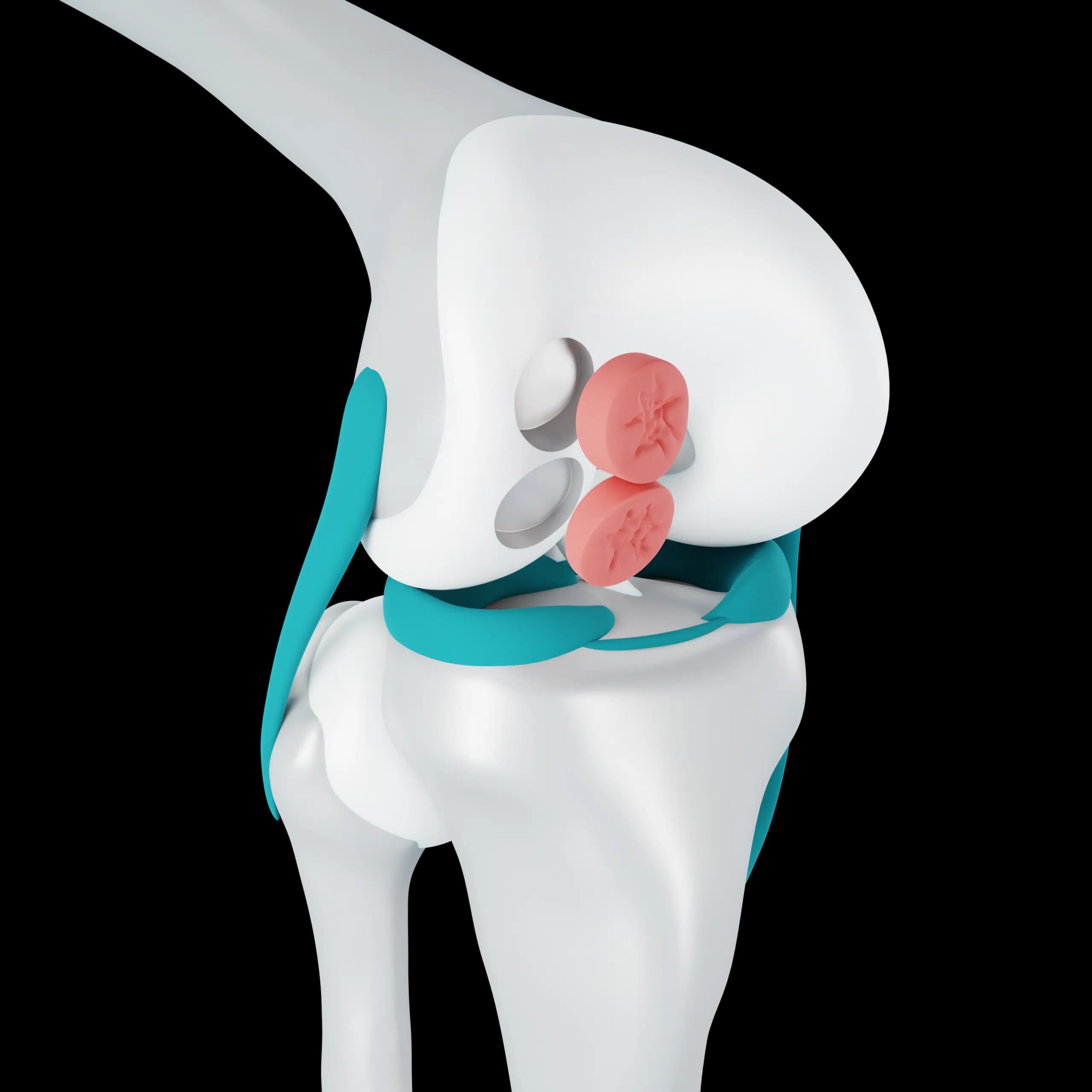
The ends of the thigh bone and shin bone are covered with smooth joint cartilage, which is supported by a layer of bone just underneath. In osteochondritis dissecans, often shortened to OCD, a patch of that supporting bone becomes weak. The cartilage above it can crack, and in some cases the piece of bone and cartilage comes loose inside the knee.
It most often affects the inner part of the end of the thigh bone, but it can occur elsewhere in the knee, including the kneecap, and sometimes in both knees.
Symptoms, as parents and patients describe them
- "His knee aches during and after football, but he can't point to one spot"
- "Her knee swells after sport and is stiff the next day"
- A limp or walking with the foot turned outwards
- "Something gets stuck in my knee" or the knee suddenly locks, which can mean a loose fragment
- Pain with stairs, jumping or kneeling
Early on, symptoms are often vague, and the condition may be found on an X-ray taken for another reason.
Causes and who gets it
The exact cause is not fully understood. Repeated stress on the bone from sport, a reduced blood supply to a small area and genetic factors are all thought to play a part. It is seen most often in active children and teenagers, roughly between 10 and 20 years of age, especially those playing running and jumping sports such as football, basketball and athletics, and it is more common in boys. Adults can also have OCD, often from a lesion that did not heal in childhood.
Diagnosis
X-rays, including a special tunnel view of the knee, usually show the lesion and whether the growth plates are still open. An MRI scan is important because it shows the size of the lesion and, crucially, whether it is stable or whether fluid has tracked under it, which suggests it is loosening. It also shows the cartilage surface and any loose bodies. The other knee may be X-rayed too.
Treatment
The plan depends on age, whether the growth plates are open, and whether the lesion is stable.
Stable lesions in children with open growth plates often heal without surgery. Treatment involves stopping running and jumping sports, sometimes using crutches or a brace for a period, and repeating X-rays or MRI over around three to six months to confirm healing. This requires patience from both the child and the family.
Surgery is considered when the lesion is unstable, when it does not heal with rest, or in older teenagers and adults. Options include arthroscopic drilling to encourage blood flow and healing, fixation of the fragment back in place with small screws or pins, and removal of loose fragments. When the defect cannot be saved, cartilage restoration techniques may be used to rebuild the surface.
Recovery
With non-surgical care, a gradual return to sport is usually possible once imaging confirms healing, often after several months. After drilling or fixation, crutches are usually needed for around six weeks, followed by physiotherapy, with return to sport commonly at around four to six months. Cartilage restoration needs a longer, more structured recovery.
For children, the school and sports coaches can help by allowing alternative activities during recovery. Swimming and cycling may be introduced earlier than running when your surgeon agrees.
When to see a knee specialist in Doha
- Knee pain in a child or teenager that lasts more than a few weeks
- Swelling after sport, or pain that is not improving with rest
- The knee catches, locks or gives way
- A limp or reluctance to play
- An X-ray or MRI report mentions an osteochondral lesion
Early diagnosis gives a better chance of the lesion healing without surgery. Dr. Gelber assesses osteochondritis dissecans in children, teenagers and adults at Aman Hospital in Doha.
Frequently asked questions
Is osteochondritis dissecans the same as OCD the mental health condition?
No. In knee medicine, OCD stands for osteochondritis dissecans, a problem of the bone and cartilage. It has nothing to do with obsessive-compulsive disorder.
Will my child need surgery?
Not necessarily. Many stable lesions in children whose bones are still growing heal with a period of rest from impact sports. Surgery is usually reserved for lesions that are unstable, loose or not healing.
Can osteochondritis dissecans cause arthritis later?
If a lesion heals well, the long-term outlook is usually good. A large lesion that does not heal, or a fragment that comes loose, can damage the joint surface and raise the risk of arthritis, which is why follow-up and treatment matter.
Glossary
Patients also ask
- What are the signs of knee OCD, and how do I know if a piece has come loose?
- My son's knee hurts after football and the MRI shows OCD. What should we do now?
- When can my teenager go back to football or basketball after knee OCD?
- How do we manage school, PE and stairs while my child is treated for knee OCD?
- Why did my child get osteochondritis dissecans? Was it something we did?
- What is osteochondritis dissecans in a teenager's knee?
- When does knee osteochondritis dissecans need surgery, and what is done?
- Will my child's knee OCD heal with rest, without surgery?
Related


