Conditions
Loose Bodies in the Knee: When Something Moves Inside the Joint
Quick answer
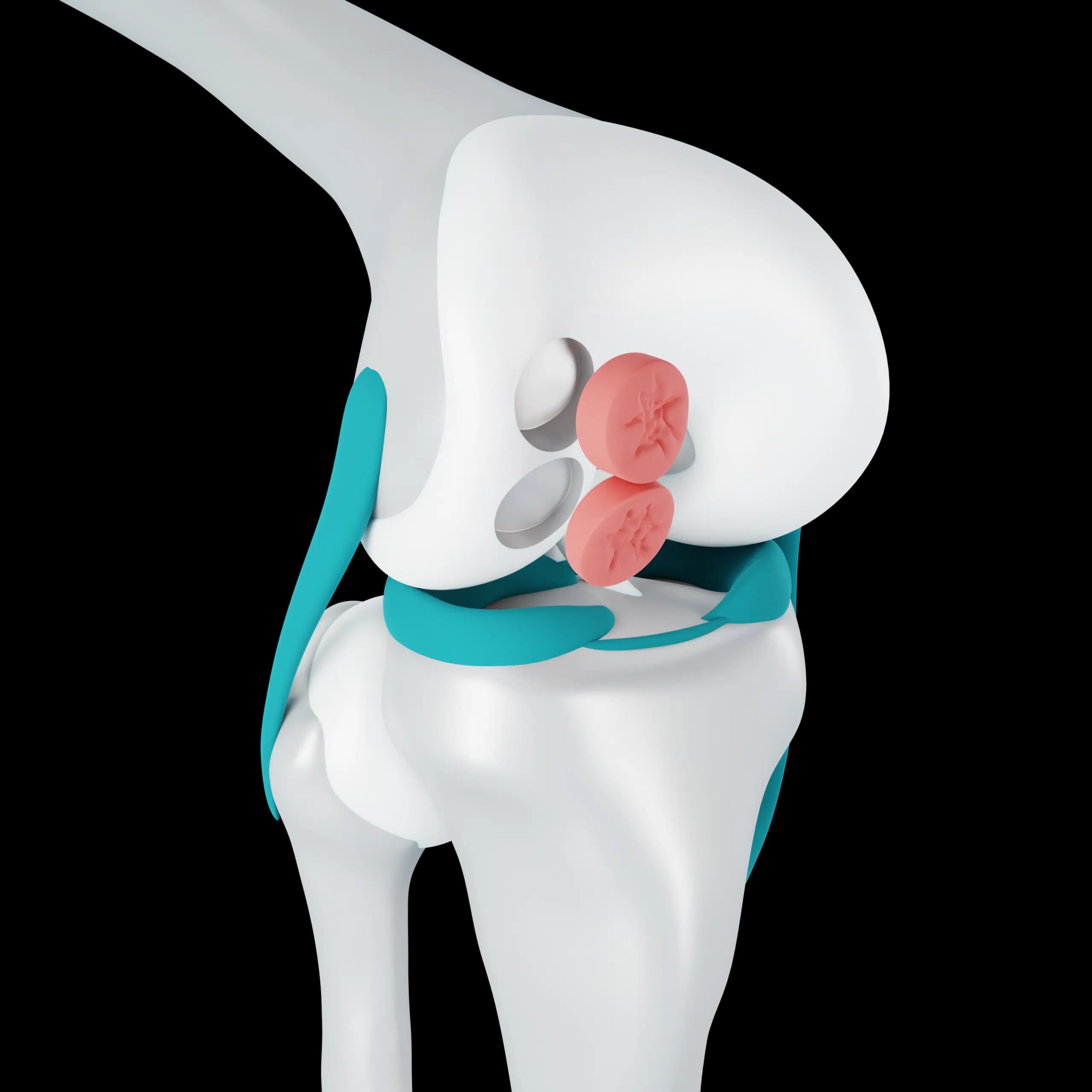
Loose bodies are fragments of cartilage or bone floating inside the knee, usually from an injury, osteochondritis dissecans or arthritis. They can make the knee lock, catch or swell. Troublesome loose bodies are usually removed by keyhole arthroscopy, and the cause is treated too, explains Dr. Pablo Gelber, knee surgeon at Aman Hospital in Doha.
What are loose bodies?
A loose body is a piece of cartilage, bone or both that has broken free and moves around in the joint fluid. Some are tiny, others the size of a pea or larger. Because they float, they can slip between the joint surfaces at unpredictable moments and jam the knee, which is why surgeons sometimes call them a joint mouse.
Loose bodies are not dangerous in themselves, but they can scratch the cartilage, cause repeated swelling and, if they are pieces of a damaged joint surface, signal a problem that needs attention.
Symptoms in patients' own words
- "My knee suddenly locks and I have to wiggle it to free it"
- "I get a sharp catching pain, then it's fine again"
- "I can feel a little lump that moves around the side of my knee"
- "It swells up after it catches"
- "It gets stuck when I kneel or bend fully, like in sujood"
Symptoms often come and go, because the fragment is only a problem when it gets caught. Some loose bodies cause no symptoms at all and are found on an X-ray or scan done for another reason.
Causes and who gets them
Common sources of loose bodies include:
- Osteochondritis dissecans, where a piece of bone and cartilage separates, usually in teenagers and young adults
- Kneecap dislocation, which can knock off a fragment of cartilage and bone
- Twisting or impact injuries that break off part of the joint surface
- Osteoarthritis, where fragments of bone spurs or worn cartilage break away
- Synovial chondromatosis, an uncommon condition in which the joint lining forms many small cartilage nodules
In Qatar we see loose bodies after kneecap dislocations in football, basketball and padel, in teenage athletes with osteochondritis dissecans, and in older adults with arthritis who notice catching when sitting on the floor or getting up from prayer.
Diagnosis
Dr. Gelber asks how and when the knee locks, examines it for swelling, movement and tenderness, and checks the ligaments and kneecap. X-rays show loose bodies that contain bone, and the arthritis or bone spurs behind them. Pure cartilage fragments do not show on X-ray, so an MRI is often used to find them, see where they came from and check for other injuries such as a meniscus tear. A CT scan is sometimes helpful for planning.
A knee that locks is not always caused by a loose body. A torn meniscus, especially a bucket-handle tear, can do the same, which is why imaging matters.
Treatment
A loose body that causes no symptoms may simply be watched, especially in an arthritic knee where it is one of many findings.
A loose body that locks, catches or causes swelling usually needs removal, because it will not dissolve and physiotherapy cannot move it out of the joint. Knee arthroscopy is the standard method: a camera and small instruments are passed through tiny incisions, the fragment is found and removed, and the rest of the joint is inspected.
In a young patient with a large, fresh fragment from osteochondritis dissecans or a kneecap dislocation, it may be possible to fix the piece back in place rather than remove it, preserving the joint surface. Where cartilage has been lost, cartilage restoration may be considered. In synovial chondromatosis, the abnormal joint lining is also removed to lower the chance of recurrence. The underlying cause, such as an unstable kneecap, is treated as needed.
Recovery
After simple arthroscopic removal, most patients walk the same day, return to desk work within days to a couple of weeks, and go back to sport over several weeks with physiotherapy. If a fragment is fixed back in place, the knee needs protection while it heals, with crutches and a longer return to sport, usually a few months. Your plan depends on what is found during surgery.
When to see a specialist in Doha
See a knee specialist if your knee locks, catches repeatedly, swells after catching, or you can feel something moving inside it. A knee that is stuck and cannot straighten after an injury should be seen promptly, as early surgery may be needed. Dr. Gelber assesses locking knees at Aman Hospital in Doha.
Frequently asked questions
Can a loose body in the knee go away on its own?
Small fragments occasionally become attached to the joint lining and stop causing trouble, but loose bodies do not dissolve. If one keeps locking the knee, removal is usually recommended.
Is it dangerous to leave a loose body in my knee?
It is not dangerous to your health, but a fragment that keeps catching can scratch the cartilage and cause repeated swelling. That is why symptomatic loose bodies are usually removed.
How soon can I pray normally after loose body removal?
Many patients can pray seated on a chair straight away and return to kneeling and sujood over a few weeks as the knee settles. Your surgeon will advise based on what was done.
Glossary
Patients also ask
- Does a loose body in the knee always need surgery?
- I can feel something moving around inside my knee. What could it be?
- My knee jams at different angles, then frees itself. Is that a loose body?
- What causes loose bodies in the knee?
- What happens in keyhole surgery to remove a loose body from the knee?
- When can I play padel or football again after a loose body is removed?
Related

