Conditions
Discoid Meniscus in Children and Adults

Quick answer
A discoid meniscus is a meniscus that formed thicker and disc-shaped instead of a thin crescent, usually on the outer side of the knee. Many cause no problems, but some tear or snap and need keyhole reshaping, explains Dr. Pablo Gelber, who treats children and adults with knee problems at Aman Hospital in Doha, Qatar.
What is a discoid meniscus?
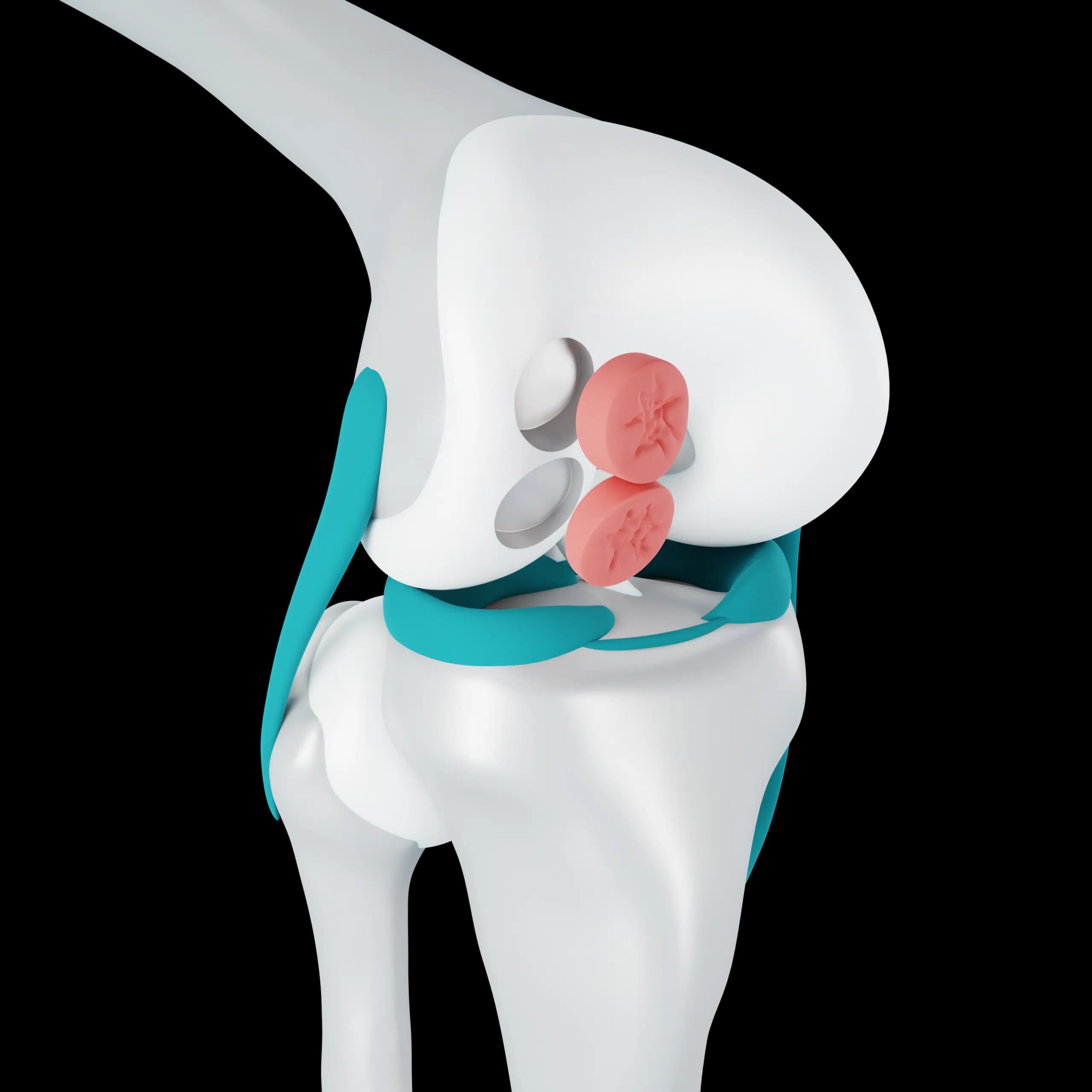
Normally each meniscus is a thin, C-shaped cushion. A discoid meniscus is a variation present from birth, in which the meniscus covers more of the shin bone, like a disc, and is often thicker. It almost always affects the lateral meniscus on the outer side of the knee, and it can be present in both knees.
The extra tissue is not as well organised as a normal meniscus, and some discoid menisci are loosely attached at the back. That makes them more likely to tear or to shift, which is what causes symptoms.
Symptoms, as parents and patients describe them
- "His knee makes a loud clunk when he straightens it"
- "She can't straighten her knee all the way"
- Pain on the outer side of the knee during or after sport
- Swelling after activity
- Limping, or the knee catching or locking
- A child who avoids running or sport without saying why
Many discoid menisci cause no symptoms at all and are only found on an MRI done for another reason.
Who gets it
A discoid meniscus is present from birth, but symptoms often appear in childhood or the teenage years, when sport increases the load on the knee. Younger children with an unstable discoid meniscus may have the classic snapping knee, while teenagers and adults more often present with a tear after a twisting injury in football, basketball or padel. It is reported more often in some Asian populations, and it is a common reason for knee clicking with pain in children.
Diagnosis
Examination looks for tenderness on the outer joint line, a clunk as the knee straightens and any loss of movement. X-rays are usually normal but can show a slightly wider joint space on the outer side, and they rule out other causes of knee pain in children such as osteochondritis dissecans.
An MRI scan confirms a discoid meniscus, shows whether it is torn and whether it is stable. For children, the scan is usually possible without sedation from around school age.
Treatment
A discoid meniscus that causes no symptoms is simply observed. There is no need to operate on it, even if it was found by chance.
When it causes pain, locking or loss of straightening, arthroscopic surgery is usually recommended. The aim is to save as much meniscus as possible. Through small incisions, the thick central part is carefully trimmed into a more normal crescent shape, a technique called saucerisation, and the remaining rim is checked. If the rim is loose or torn, it is stitched back to the capsule. Removing the whole meniscus is avoided wherever possible, because it raises the long-term risk of arthritis on the outer side of the knee.
Physiotherapy alone does not change the shape of the meniscus, but it can help when symptoms are mild.
Recovery
After reshaping alone, most children walk comfortably within days and return to school in about a week, then build back to sport over around six to eight weeks. When the meniscus also needed stitching, crutches and limited bending are usually advised for around four to six weeks, and return to sport is usually at around four to six months.
Regular follow-up is useful, because the other knee can also have a discoid meniscus and a reshaped meniscus should be monitored over the years.
When to see a knee specialist in Doha
- A child's knee clunks and it is painful or swollen
- The knee cannot straighten fully or keeps locking
- A teenager has outer knee pain after a twisting injury
- Your child limps or avoids sport for more than a couple of weeks
Painless clicking on its own is common in children and is usually not a concern. Dr. Gelber assesses discoid meniscus in children, teenagers and adults at Aman Hospital in Doha.
Frequently asked questions
Is a discoid meniscus my child's fault or something we did?
No. It is a developmental variation present from birth. Nothing a parent or child did caused it, and sport did not create it, although sport can bring out the symptoms.
Will my child be able to play sport again?
Many children return to football, swimming and other sports after treatment. The timing depends on whether the meniscus was only reshaped or also repaired, and on how the knee recovers.
Should both knees be checked?
A discoid meniscus can affect both knees. The other knee is examined at the consultation, and imaging is considered only if it also causes symptoms.
Glossary
Patients also ask
- Can my child keep playing football with a discoid meniscus?
- Does a discoid meniscus need surgery if it doesn't hurt?
- How is a discoid meniscus diagnosed in a child? Will they need an MRI?
- My child's knee clunks and won't fully straighten. Should I worry?
- What is a discoid meniscus, and was my child born with it?
- What is saucerization surgery for a discoid meniscus?
Related