Guide
Children's and teenagers' knees: a guide for parents
Quick answer
Most knee pain in children and teenagers comes from growth and sport load and settles with sensible changes to activity. A limp, swelling, a knee that locks or gives way, or pain that wakes your child at night should be examined, advises Doha knee surgeon Dr. Pablo Gelber at Aman Hospital.
Growing pains or something more?
True growing pains are common between roughly three and twelve years of age. They are usually felt in both legs, in the thighs, calves or behind the knees rather than in the joint itself, and they come in the evening or at night after an active day. In the morning the child is fine, walks normally and wants to play. Gentle massage, warmth and reassurance are usually enough.
Pain that does not follow this pattern deserves more thought. Pain in one knee only, pain in the joint itself, pain present during the day as well as at night, or pain that is slowly getting worse is not typical of growing pains and is worth having checked.
Warning signs that need prompt attention
Arrange an examination soon, or seek urgent care, if your child has any of the following:
- A limp or refusal to put weight on the leg.
- A swollen, hot or red knee, especially with fever or feeling unwell.
- Pain that regularly wakes them from sleep.
- A knee that locks, catches or gives way.
- Swelling within hours of a twist or fall in sport.
- A kneecap that has slipped out of place.
- Unexplained weight loss, tiredness or bruising.
- Hip or thigh pain with a limp, particularly in children aged about 10 to 16.
The last point matters because hip problems in growing children can show up as knee pain. A careful examination always includes the hip. A hot, swollen knee with fever, or a child who cannot bear weight at all, needs medical care the same day.
Growth plates and why young knees are different
Growth plates are areas of softer, growing cartilage near the ends of the thigh and shin bones, and at the tendon attachments below the kneecap. In growing children they are often weaker than the ligaments and tendons around them. That is why a twist which would tear a ligament in an adult can injure a growth plate in a child, and why tendons pulling on growth areas cause common overuse conditions.
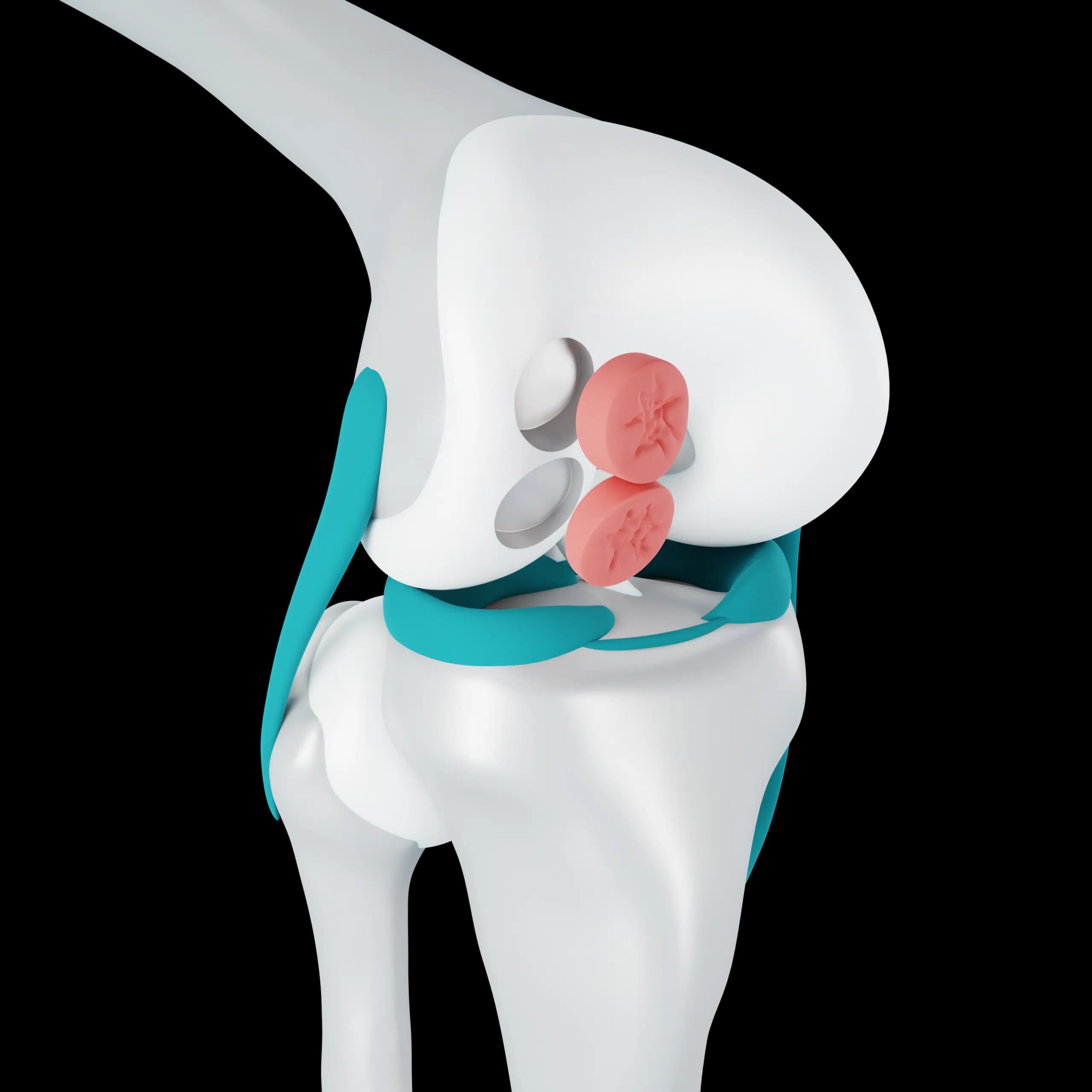
Osgood–Schlatter disease, a painful bump just below the kneecap, and Sinding-Larsen–Johansson, pain at the lower tip of the kneecap, are typical in active pre-teens and early teenagers during growth spurts. They usually settle with load management and time. Osteochondritis dissecans, where a small area of bone and cartilage loses its blood supply, and a discoid meniscus are less common but need specialist assessment. Teenagers who are close to the end of growth can also tear the ACL or meniscus, and treatment is planned around how much growth remains.
School sport, academies and training load
Many children in Qatar train with a club or academy several evenings a week, play school sport and then play again at weekends. Knee pain in these children often comes from the total weekly load rather than any single session, especially during a growth spurt when muscles feel tight and coordination is temporarily off.
Useful habits for parents include:
- Counting the total hours of training and matches across school, club and academy.
- Building in at least one or two rest days a week and a longer break each year.
- Encouraging more than one sport, rather than year-round focus on a single sport at a young age.
- Talking to the coach about reducing jumping and sprinting during painful spells rather than stopping completely.
- Training at cooler times or indoors in the summer, with plenty of fluids.
What you can do at home
For overuse pain without warning signs, reduce the activities that clearly provoke it for a week or two, use ice for 15 minutes after sport, and keep your child moving with activities that do not hurt, such as swimming or cycling. Simple painkillers in the dose recommended for their age can help. Gentle stretching of the thigh muscles and strengthening exercises taught by a physiotherapist often help more than rest alone. If pain is not improving after two to three weeks, or any warning sign appears, book an assessment.
What a consultation for your child involves
A parent or guardian attends with the child. The consultation starts with how the pain began, what sport they play and how often, and whether anything makes it better or worse. The examination includes both knees, the hips, walking and sometimes a squat or hop. X-rays are not needed for every child, but are used when the history or examination suggests a bony problem, and an MRI is requested when a cartilage, meniscus or ligament injury is suspected. Appointments at Aman Hospital in Doha can be booked on +974 4400 4400 or by WhatsApp.
Frequently asked questions
Should my child stop sport because of knee pain?
Usually not completely. Reducing the most painful activities while staying active is often enough for overuse pain. Stopping is advised after an acute injury with swelling or instability until the knee has been examined.
Can children tear the ACL?
Yes, particularly teenagers who play football, basketball or handball. Treatment takes the growth plates into account, and surgical techniques are adapted to protect growth when reconstruction is needed.
Does my child need an X-ray for knee pain?
Not always. Typical growing pains and many overuse problems are diagnosed by history and examination. X-rays are useful for a limp, night pain, a hard lump, persistent pain or after significant injury.
Will Osgood–Schlatter cause problems later?
In most children it settles once growth slows, although the bump below the knee may remain. A small number have discomfort when kneeling into adulthood.
Is it normal for my teenager's knees to click?
Painless clicking is common and usually harmless. It is worth an examination if it comes with pain, swelling, locking or the knee giving way.
Related
 ConditionsKnee Pain in Children and Teenagers
- Patient questionWhen should I worry about my child's knee pain?
- Patient questionMy child wakes at night with knee pain. Is it just growing pains?
- ConditionsOsgood–Schlatter Disease: Knee Pain in Growing Children
 Patient questionMy child or teenager has torn their ACL. What is different for young patients?
 ConditionsOsteochondritis Dissecans (OCD) of the Knee