Patient question
Partial vs total knee replacement: what is the difference?
 Dr. Pablo GelberOrthopaedic Knee Surgeon
Quick answer
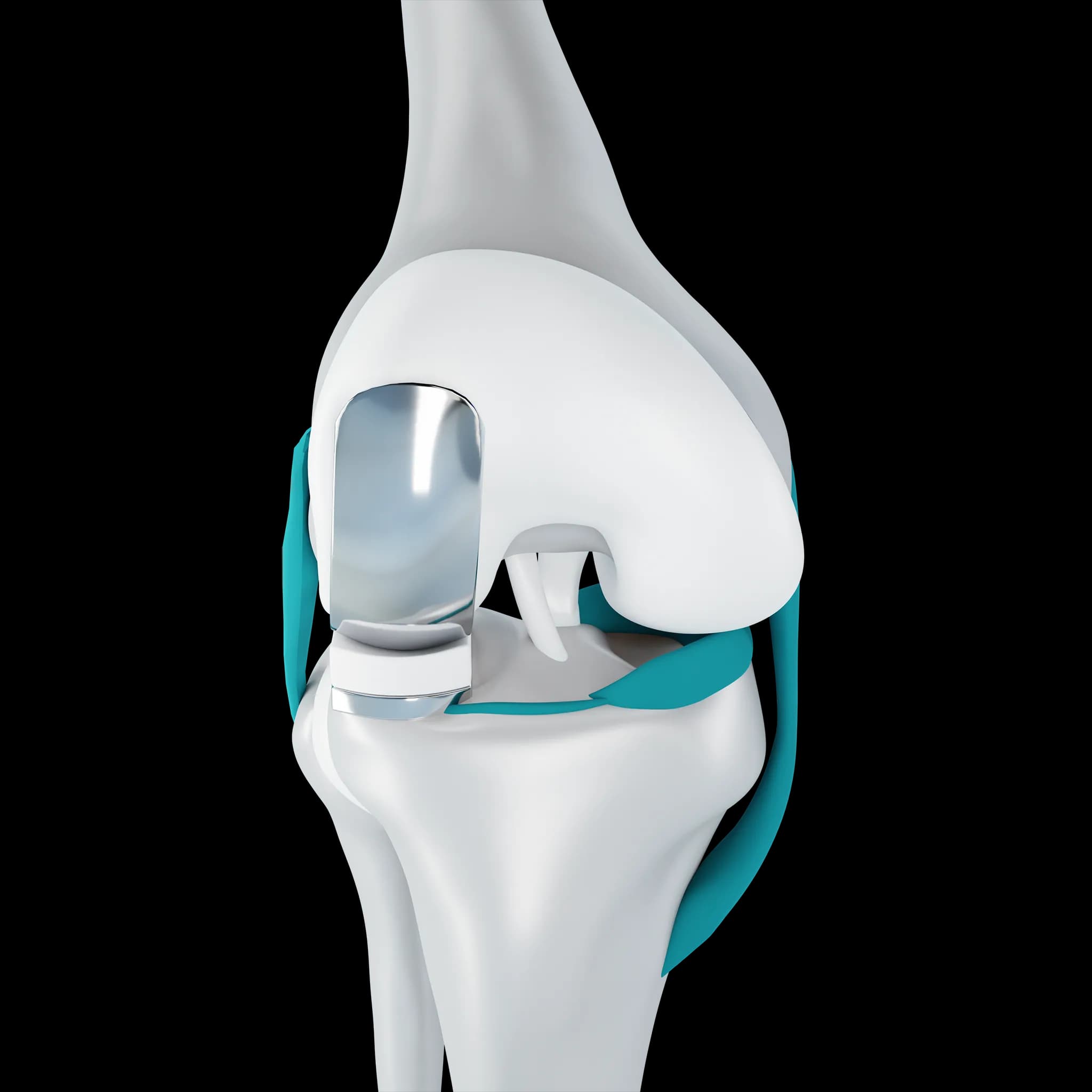
A partial replacement resurfaces one worn compartment and keeps the ligaments, so recovery is usually quicker and the knee often feels more natural. A total replacement resurfaces the whole joint and suits widespread arthritis, with a lower chance of needing further surgery, explains Dr. Pablo Gelber, knee surgeon in Doha.
The main differences at a glance
- Extent: a partial replaces one compartment; a total replaces all three joint surfaces
- Ligaments: a partial keeps both cruciate ligaments; most totals remove the ACL and some the PCL
- Incision and bone removed: smaller with a partial
- Hospital stay and early recovery: usually shorter with a partial
- Feel: many partial patients describe a more natural-feeling knee
- Further surgery: partial replacements, on average, have a higher chance of needing revision over the long term
Advantages of a partial replacement
Because less of the knee is disturbed, patients usually walk sooner, bend the knee more easily in the early weeks and get back to normal activities faster. Blood loss and some complications, such as serious infection and blood clots, tend to be lower than after a total knee. Keeping the ligaments helps the knee move and sense its position in a more natural way, which matters to people who want to stay active.
Advantages of a total replacement
A total knee treats arthritis wherever it is in the joint, so there is no risk of untreated compartments wearing out later. It can correct larger deformities and deal with damaged ligaments. Over many years, totals have a lower revision rate on average. For people with arthritis across the knee, inflammatory arthritis or a stiff, deformed knee, a total is usually the more reliable choice.
Choosing between them
The choice is driven by your knee, not by preference alone. Dr. Gelber at Aman Hospital in Doha looks at where your pain is, how the knee moves, ligament stability and weight-bearing X-rays. If you are a candidate for both, he will discuss the trade-off openly: quicker recovery and a more natural feel against a somewhat higher chance of a second operation in the future.
Frequently asked questions
Is a partial knee replacement just for older people?
No. It is used across a range of ages. What matters more is the pattern of arthritis and the state of the ligaments.
Is the risk of the operation itself lower with a partial?
Generally yes. Partial replacements are associated with fewer serious early complications than total knees, though every operation carries some risk.
Related
