Patient question
Is a partial knee replacement just a temporary fix? Common myths answered
 Dr. Pablo GelberOrthopaedic Knee Surgeon
Quick answer
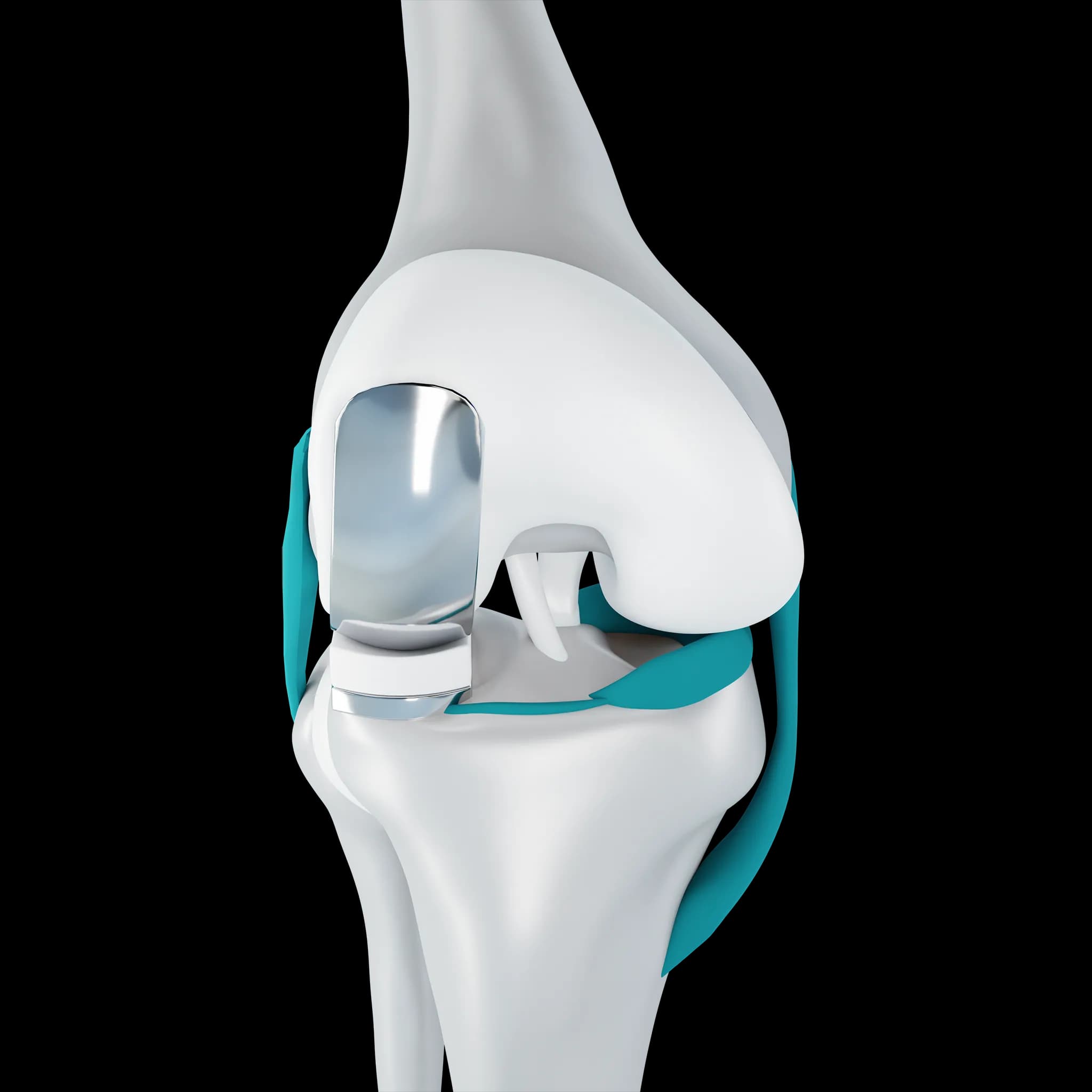
No. In the right knee, a partial replacement is a lasting treatment, not a stopgap, and many work well for well over a decade. It is not keyhole surgery and not suitable for everyone, but for arthritis confined to one compartment it can give a natural-feeling knee, explains Dr. Pablo Gelber, knee surgeon at Aman Hospital in Doha.
Myth: it is only a temporary fix
Joint registries show that most partial knee replacements are still working at ten years and many well beyond. Revision rates are somewhat higher than for total knees in registry data, partly because a partial knee is easier to convert to a total if needed. When patients are carefully selected and the implant is well positioned, long-term results are good.
Myth: it is keyhole surgery
A partial replacement is done through a small open incision, usually shorter than for a total knee. Arthroscopy, or keyhole surgery, is different: it uses a camera and does not place any implant. Arthroscopy is not an effective treatment for typical knee arthritis.
Myth: it is only for young or slim people
Older patients often do very well with a partial replacement because of the faster recovery. Body weight is considered, but moderate excess weight alone does not usually rule it out. What matters most is the pattern of arthritis, a working ACL, good movement and a correctable deformity.
Other beliefs worth correcting
- Having a partial now does not prevent a total replacement later
- The rest of the knee does not automatically wear out faster after a partial
- Not every knee with pain on one side is suitable; the X-rays and examination decide
- A partial replacement is still a joint replacement and needs proper rehabilitation
- Feeling more natural does not mean you can ignore advice on high-impact sport
Knowing if it suits you, in Doha
At Aman Hospital, Dr. Gelber examines the ligaments, range of movement and alignment, and reviews standing X-rays, sometimes with stress views or an MRI. He then explains whether a partial replacement, a total replacement or a joint-preserving option fits your knee.
Frequently asked questions
Is recovery really faster than with a total knee?
In many patients, yes. Less tissue is disturbed and blood loss is usually lower, so walking, stairs and returning to normal activity often come sooner.
If my partial knee fails, is the next operation harder?
Converting a partial to a total knee is usually simpler than revising a total knee, although it is still a significant operation.
Related