Procedures
High Tibial Osteotomy (Knee Realignment) in Doha

Quick answer
High tibial osteotomy realigns the shin bone so that body weight shifts away from a worn inner knee onto healthier cartilage. For active patients with bow legs and arthritis limited to one side, it can relieve pain and delay knee replacement, says Doha knee surgeon Dr. Pablo Gelber at Aman Hospital.
What is a high tibial osteotomy?
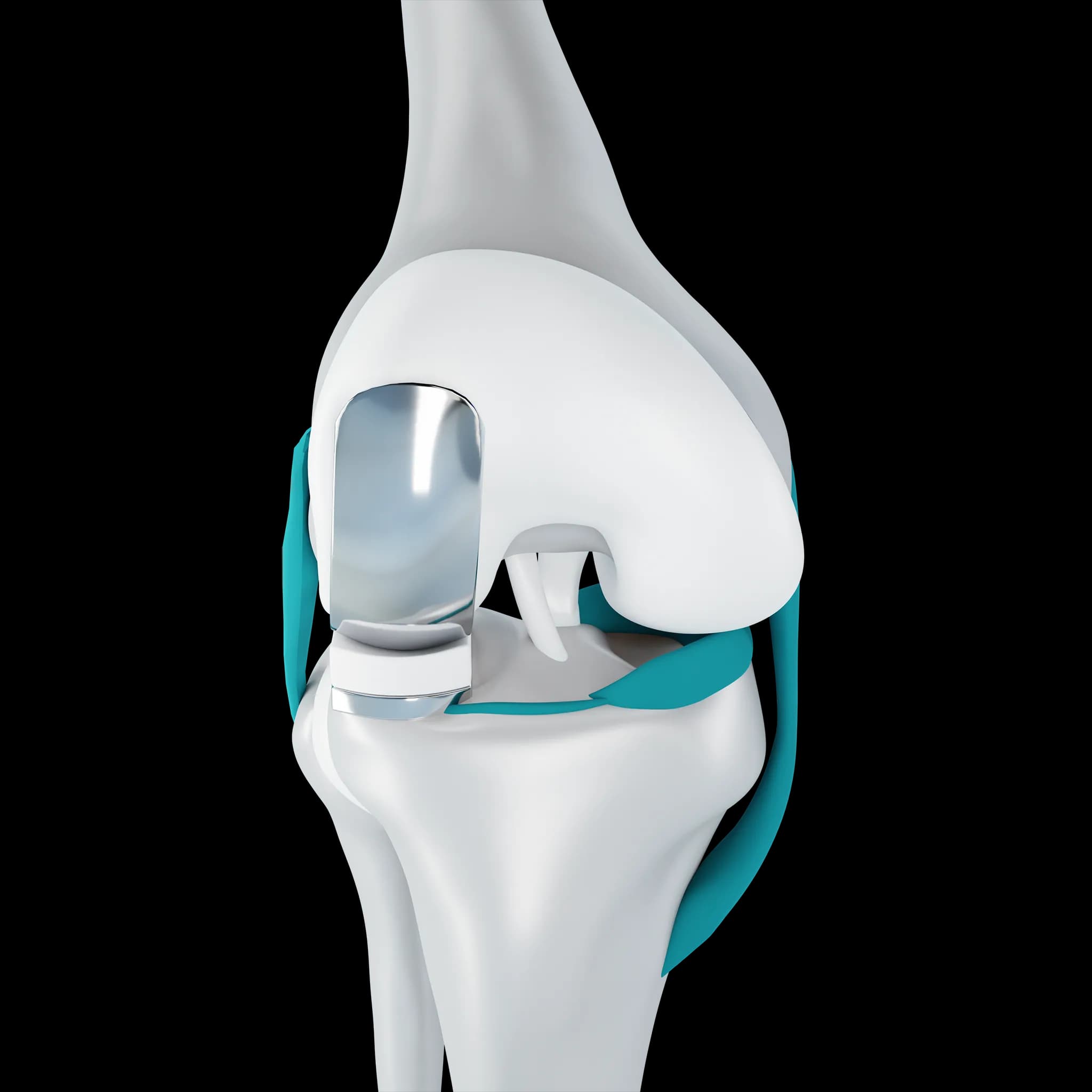
Osteotomy means cutting bone. In a high tibial osteotomy (HTO), the surgeon makes a controlled cut in the upper shin bone, just below the knee, and changes its angle by a few degrees. The new position is held with a plate and screws while the bone heals, in the same way a fracture heals.
In a bow-legged knee, most of the body's weight passes through the inner (medial) compartment. Over years this overload wears the cartilage there. Correcting the alignment moves the weight-bearing line towards the centre or slightly to the outer side, where the cartilage is healthier. The patient keeps their own knee joint and ligaments.
Who is it for?
- Arthritis or cartilage damage mainly in the inner compartment of the knee
- Bow-legged (varus) alignment confirmed on full-length standing X-rays
- A healthy outer compartment and kneecap joint
- Good range of movement and stable ligaments, or ligaments that can be reconstructed at the same time
- Usually younger and active patients, often under around 60, who want to keep working, training or playing sport
It is also used with cartilage restoration or meniscus procedures to protect the repair, and with ACL reconstruction in selected knees with poor alignment. It is less suitable for advanced arthritis throughout the knee, inflammatory arthritis, marked stiffness, or heavy smoking, which slows bone healing.
Assessment before surgery
Assessment includes a detailed examination and full-length standing X-rays of both legs to measure alignment precisely. An MRI shows the cartilage, meniscus and ligaments in each compartment. The correction is planned to the degree, sometimes with computer-assisted planning. Health factors that affect bone healing, such as smoking, diabetes control and vitamin D level, are addressed beforehand. Low vitamin D is common in Qatar and is worth checking.
The operation
The most common technique today is the opening-wedge osteotomy. Through an incision on the inner side of the upper shin, the bone is cut most of the way across, gently opened to the planned angle, and fixed with a locking plate. The gap fills with new bone over the following months, sometimes helped by bone graft. A closing-wedge technique from the outer side is used in some cases. An arthroscopy may be performed at the same time to treat the meniscus or cartilage. Surgery is done under general or spinal anaesthesia, and most patients stay in hospital for one to three nights.
Recovery
- Crutches for several weeks, with weight-bearing increased according to the fixation and the surgeon's advice
- Knee bending exercises start early to prevent stiffness
- Driving is usually possible after about six weeks for most patients, once you can bear weight and control the leg safely
- Desk work after about four to six weeks; physical work later, often after three months
- Bone healing takes around three months; full benefit may take six months to a year
The plate may be removed later if it irritates the skin. Physiotherapy guides each stage, and return to low-impact sports such as cycling and swimming is common. Many patients return to more demanding activities as well, depending on the knee.
Benefits and risks
In well-selected patients, osteotomy reduces pain and allows an active life while delaying the need for a replacement, often for many years. Because the knee joint is preserved, a later knee replacement remains possible if arthritis progresses.
Risks include delayed bone healing, over- or under-correction, infection, blood clots, stiffness, nerve or vessel injury, and irritation from the plate. Careful planning and patient selection reduce these risks.
Osteotomy at Aman Hospital in Doha
Dr. Gelber assesses alignment and cartilage in every patient with inner knee arthritis and explains whether osteotomy, partial replacement or total replacement fits their knee, age and goals. For patients in Qatar, timing can be planned around work, Ramadan and the cooler months when rehabilitation outdoors is easier.
Frequently asked questions
Is osteotomy better than knee replacement?
They suit different patients. Osteotomy keeps your own knee and suits younger, active people with arthritis on one side and bow legs. Replacement suits more advanced or widespread arthritis. The choice depends on examination, X-rays and your goals.
Will my legs look straighter?
Yes, usually slightly. The correction is planned to unload the knee rather than for appearance, but many patients notice their leg looks less bowed afterwards.
Can I have a knee replacement later?
Yes. If arthritis progresses years later, a knee replacement can still be performed. The plate may need to be removed, and the surgeon will plan for the previous surgery.
Can I pray and kneel after an osteotomy?
Most patients regain enough bending for sujood and sitting once recovery is complete, as the joint itself is preserved. During the first months, praying on a chair is often more comfortable.
Glossary
Patients also ask
- Am I too old or too heavy for a high tibial osteotomy?
- Can a brace or insoles help instead of an osteotomy?
- Does an osteotomy make a future knee replacement harder?
- When can I drive and go back to work after a high tibial osteotomy?
- When can I fly home after a high tibial osteotomy?
- How long is the recovery after a high tibial osteotomy?
- What are the risks of a high tibial osteotomy?
- I'm bow-legged and the inside of my knee is wearing out. What can I do?
- How do surgeons decide if I need an osteotomy? The long-leg X-ray explained
- Osteotomy or knee replacement: which makes sense in my 40s or 50s?
- Can I play padel, football or run after a high tibial osteotomy?
- What affects the cost of a high tibial osteotomy in Qatar?
- What actually happens during a high tibial osteotomy operation?
- What is a high tibial osteotomy?
Related