Glossary
Unicompartmental knee replacement (partial knee)

Quick answer
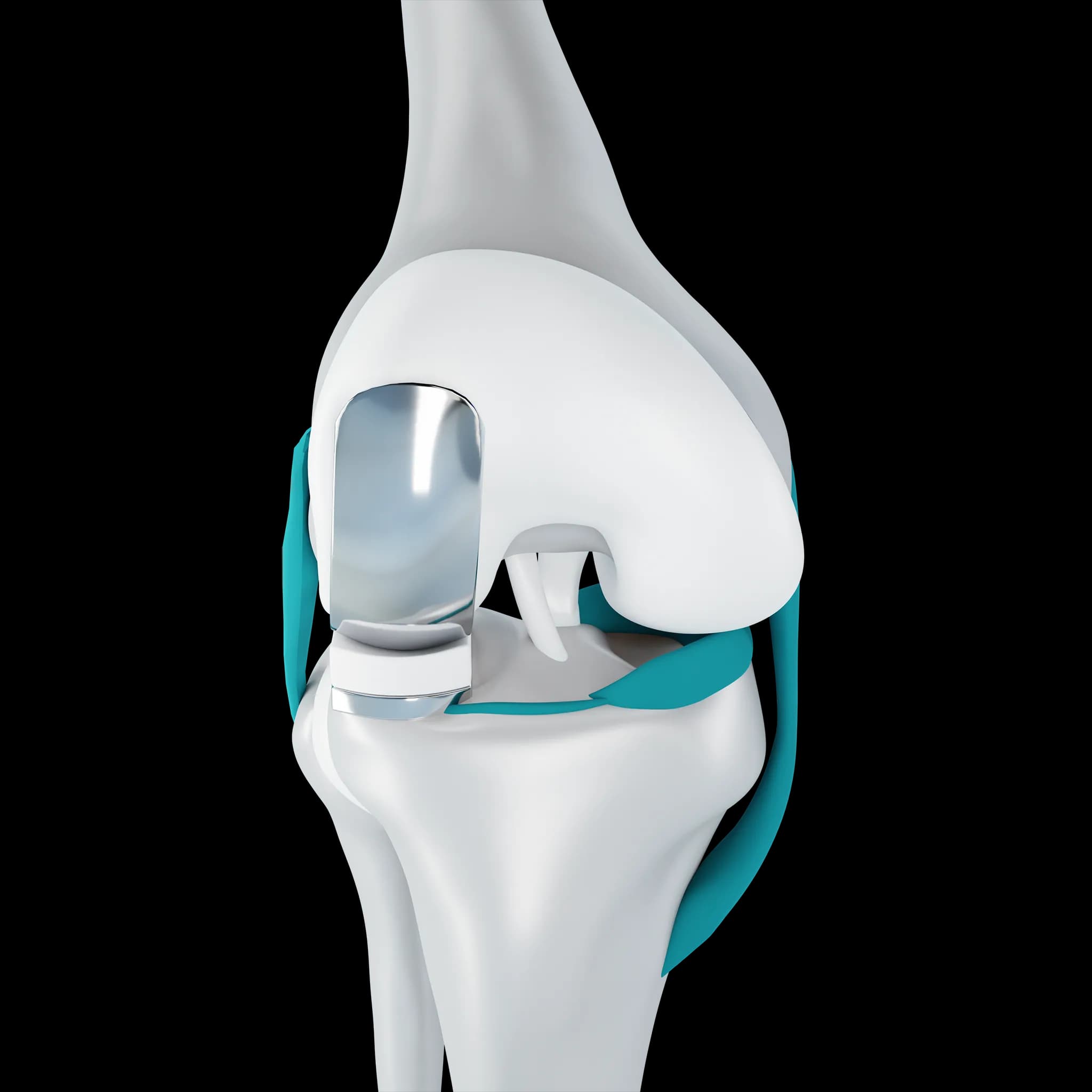
A unicompartmental knee replacement resurfaces only the worn compartment of the knee, most often the inner side, leaving the healthy cartilage and the cruciate ligaments in place. For suitable patients, Doha knee surgeon Dr. Pablo Gelber at Aman Hospital says it can feel more natural than a total knee replacement.
What it is
The knee has three compartments: inner (medial), outer (lateral) and behind the kneecap (patellofemoral). Arthritis sometimes affects mainly one. In a unicompartmental replacement, the damaged surfaces of that compartment alone are replaced with a metal component on the thighbone, a metal tray on the shinbone and a plastic bearing between them.
The operation uses a smaller incision than a total knee replacement.
Why it matters for patients
Because more of your own knee is kept, many patients recover faster, have less blood loss, bend further and describe a more natural feel. Hospital stays are often short.
The trade-off is that arthritis can progress in the untouched compartments over time, and revision rates in registries are higher than for total knee replacement. Some patients later convert to a total knee.
Who may be suitable
Suitability depends on arthritis confined to one compartment, a functioning ACL, a correctable deformity and a good range of motion. Standing X-rays, sometimes stress X-rays or MRI, and examination decide it. Weight, age and activity are weighed rather than used as strict cut-offs.
Frequently asked questions
Is a partial knee replacement a smaller operation than a total?
Yes, generally. It involves less bone removal and a smaller incision, and recovery is often quicker, though it is still a major joint operation needing rehabilitation.
Can I kneel or sit on the floor after a partial knee replacement?
Many patients regain good bending and some kneel comfortably, though kneeling may feel unusual over the scar. Floor sitting varies and is discussed according to your knee.
Related