Patient question
What is a knee replacement actually made of, and is my whole knee removed?
 Dr. Pablo GelberOrthopaedic Knee Surgeon
Quick answer
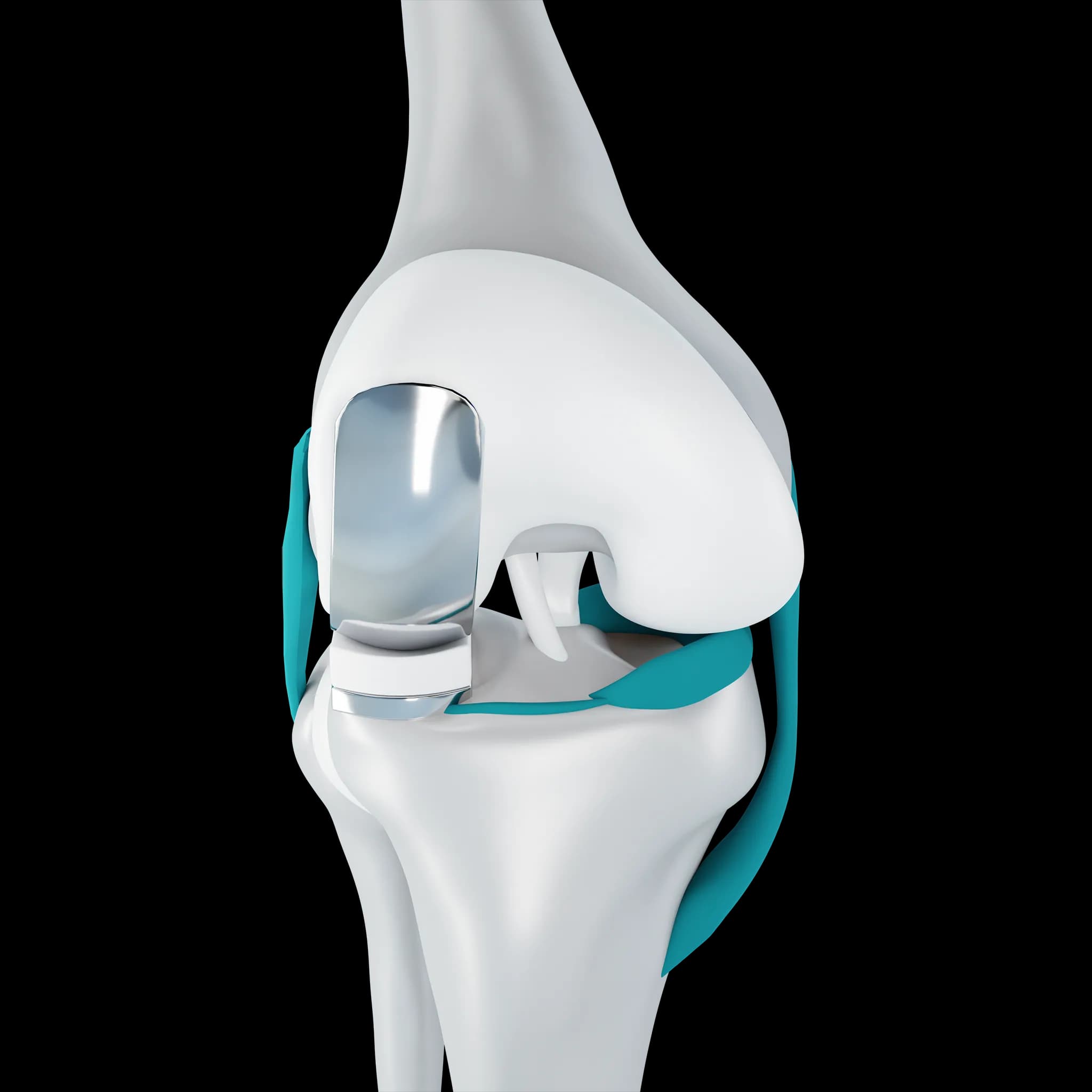
A knee replacement is a resurfacing, not removal of the whole knee. Thin layers of worn bone and cartilage are replaced with metal caps on the thigh and shin bones, with a medical-grade plastic insert between them. Your own ligaments, muscles and tendons remain, explains Dr. Pablo Gelber, knee surgeon at Aman Hospital in Doha, Qatar.
The parts of a knee replacement
- The femoral component: a curved metal cap, usually cobalt-chrome alloy, shaped to the end of the thigh bone
- The tibial component: a flat metal tray, often cobalt-chrome or titanium alloy, on top of the shin bone
- The insert: a highly durable polyethylene plastic that sits on the tray and acts as the new gliding surface
- The patellar button: a plastic dome sometimes placed on the back of the kneecap, depending on its condition and the surgeon's assessment
In a partial knee replacement, only one side of the joint is resurfaced with a smaller version of these parts.
How it is fixed to the bone
Most knee replacements are fixed with bone cement, an acrylic material that sets within minutes and holds the components firmly from the day of surgery. Some designs are uncemented, with a textured surface into which the bone grows over the following weeks. Both methods are well established, and the choice depends on bone quality, the implant design and the surgeon's experience.
Metal allergy and other common concerns
Some people are allergic to nickel in jewellery. True problems with a knee implant because of metal allergy are rare, but if you have a known, significant metal allergy, tell your surgeon, as implants with special coatings or alternative alloys are available.
The implant may trigger airport metal detectors. Body scanners and security staff are used to joint replacements, so a medical card is not usually needed, but you can carry a note if it reassures you. MRI scans can generally be done safely with a knee replacement, though the metal may blur images close to the joint.
Choosing the implant for your knee
Implants come in many sizes and several designs, for example whether the cruciate ligament at the back of the knee is kept or replaced by the shape of the implant. Dr. Gelber selects the design and size after examining your knee and measuring on X-rays, and he can explain the choice at your consultation at Aman Hospital.
Frequently asked questions
Can I feel the implant inside my knee?
Some people notice a clicking sensation as the metal and plastic move, especially early on. It is usually harmless and becomes less noticeable over time.
Does a knee replacement set off the walk-through scanner?
It may. Tell the security officer that you have a knee replacement; a quick additional check is all that is usually needed.
Related
