Procedures
Revision Knee Replacement: When a Knee Replacement Needs Redoing
Quick answer
Revision knee replacement is surgery to remove and replace part or all of an existing knee implant that has become loose, infected, unstable, worn or persistently painful. It is more complex than a first replacement, and finding the exact cause beforehand is essential, explains Dr. Pablo Gelber, knee surgeon at Aman Hospital in Doha.
What is revision knee replacement?
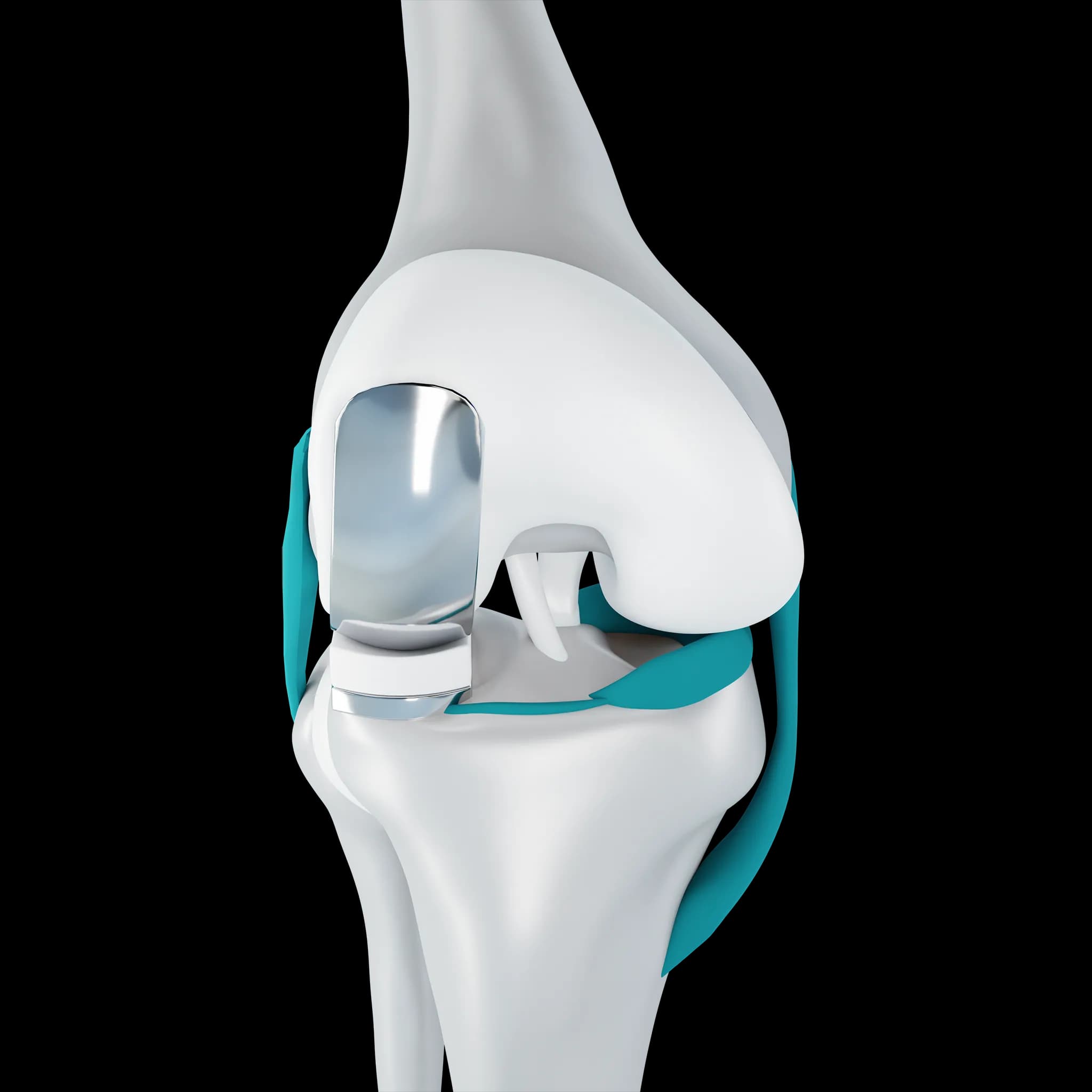
Most knee replacements work well for many years. A small proportion develop a problem that cannot be solved without further surgery. In a revision, the surgeon removes some or all of the original components, deals with the underlying cause, rebuilds any lost bone and fits new implants designed for revision surgery. These often include longer stems into the bone, metal blocks to fill defects, and more constrained designs that give extra stability.
Revision may involve all components or only one part, such as the plastic insert or the kneecap component, depending on the problem.
Why a knee replacement may need revising
- Infection around the implant, which may appear early or years later
- Loosening of the components from the bone
- Instability: the knee feels wobbly or gives way, often because the ligaments are not balanced
- Stiffness that does not improve with physiotherapy
- Wear of the plastic insert over time
- Malposition of the components, causing pain or poor movement
- A fracture of the bone around the implant after a fall
- Progression of arthritis in a compartment left after a partial knee replacement
Symptoms, in patients' own words
- "My knee replacement was fine for years and now it hurts when I walk"
- "It feels loose, like it might give way on the stairs"
- "It never really bent properly after the operation"
- "It's warm and swollen and the wound keeps leaking"
- "It clunks or grinds"
New pain after a period of good function, swelling, warmth and instability all deserve assessment. Fever, redness, a draining wound or sudden severe pain in a replaced knee need prompt medical review, as they may indicate infection.
Investigations come first
Revision is planned only once the cause is clear. Dr. Gelber takes a detailed history, examines the knee and reviews your original operation notes and implant details where available. X-rays compare the position of the components over time. Blood tests for inflammation and, in many cases, aspiration of fluid from the knee are used to check for infection. CT or nuclear medicine scans may help with loosening or rotation of the components.
Revising a knee for pain without an identified cause usually gives disappointing results, so when tests do not explain the pain, other sources, such as the hip, back or nerves, are considered first.
The operation
Revision surgery takes longer than a first replacement and is usually carried out under spinal or general anaesthesia. The old components are removed while preserving as much bone as possible, and the knee is rebuilt with revision implants.
When infection is present, treatment depends on how long it has been there. An early infection may be treated by washing out the joint and exchanging the plastic insert while keeping the main components. A long-standing infection is commonly treated in two stages: the implants are removed and replaced with a temporary antibiotic-loaded spacer, antibiotics are given, and the new knee is implanted at a second operation once the infection is controlled. Single-stage exchange is used in selected cases.
Recovery
Recovery is usually slower than after a first replacement. Most patients stay in hospital for several days and walk with a frame or crutches from the first day or two, though weight-bearing may be limited when bone has been rebuilt. Physiotherapy continues for several months. Many patients gain good pain relief and function, but results are generally less predictable than after a first replacement, and the aim is a stable, comfortable knee for daily life.
Risks
Risks are higher than for a first replacement and include infection or recurrence of infection, stiffness, instability, blood clots, wound problems, fracture, nerve or vessel injury, and the possibility of further surgery. Good diabetes control, stopping smoking and optimising general health before surgery all help reduce these risks.
Assessment in Doha
If you have a knee replacement that has become painful, swollen or unstable, whether it was done in Qatar or abroad, an assessment at Aman Hospital can help find the cause. Bring your operation records, implant stickers or card, and previous X-rays if you have them.
Frequently asked questions
How long does a knee replacement usually last?
Most knee replacements last many years, and for many patients a lifetime. Longevity depends on age, activity, weight, implant type and surgical factors, so it varies from person to person.
My knee replacement was done abroad. Can it be assessed in Doha?
Yes. Bring whatever records you have, especially the implant details and operation notes. Missing records can often be worked around with imaging, but they make planning easier.
Is revision surgery covered by insurance?
Coverage depends on your policy and the reason for revision. Check with Aman Hospital and your insurer, who can advise on pre-approval and which tests and implants are included.
Will I be able to pray and sit as I did before?
Most patients can pray seated on a chair after revision. Deep bending for sujood or floor sitting is often limited after any knee replacement, and more so after revision, so it is worth discussing your expectations beforehand.
Glossary
Patients also ask
- How do doctors tell if a knee replacement is loose or infected?
- My knee replacement feels wobbly and gives way. What could be wrong?
- My knee replacement still hurts after a year. Do I need a revision?
- Infected knee replacement: one-stage or two-stage revision?
- Is recovery after revision knee replacement harder than the first time?
- What affects the cost of revision knee replacement in Qatar?
- Why do knee replacements fail and need revision?
Related


