Glossary
Total knee replacement components

Quick answer
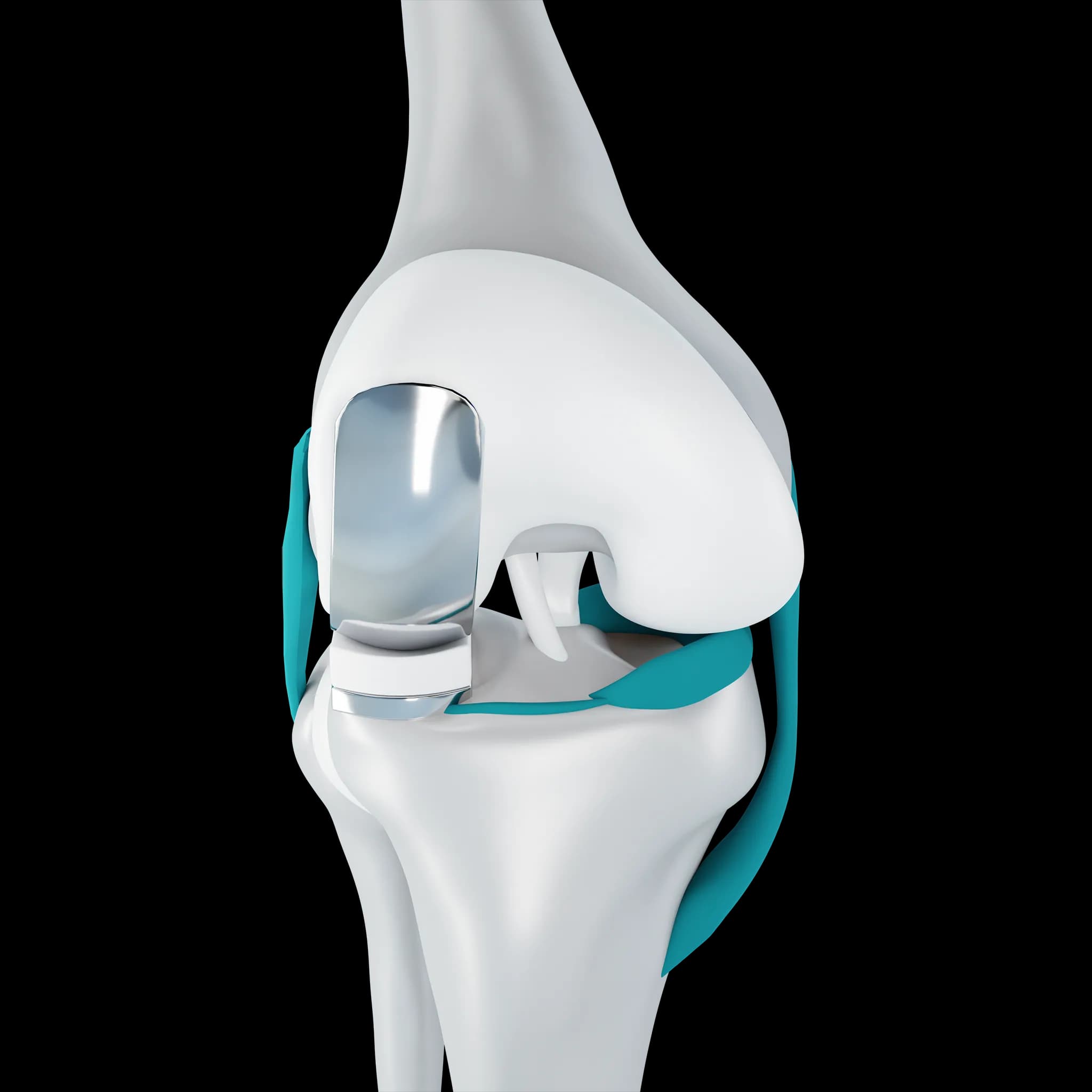
A total knee replacement has three or four parts: a metal femoral component on the thighbone, a metal tibial tray on the shinbone, a plastic insert between them, and sometimes a plastic button under the kneecap. Dr. Pablo Gelber, knee surgeon at Aman Hospital in Doha, shows patients these parts before surgery.
The parts
- Femoral component: a curved metal cap, usually cobalt-chrome alloy, that replaces the worn ends of the thighbone.
- Tibial tray: a flat metal platform, often titanium or cobalt-chrome, fixed to the top of the shinbone.
- Insert: a highly durable medical-grade polyethylene spacer that clips into the tray and acts as the new cartilage surface.
- Patellar button: a plastic dome sometimes fitted to the back of the kneecap, depending on its condition and the surgeon's practice.
Why the design matters
Implants come in many sizes and several designs. Some keep the posterior cruciate ligament, while others replace its function with a post-and-cam mechanism in a posterior-stabilised design. Some inserts are fixed and others rotate slightly.
Correct sizing, alignment and ligament balancing matter at least as much as the brand or design, and modern techniques help the surgeon achieve them.
How long the parts last
Registry data suggest most modern knee replacements are still functioning well many years later. Wear of the plastic insert, loosening or infection are the main reasons for revision. Staying active, keeping weight in a healthy range and treating infections elsewhere promptly all help protect the implant.
Frequently asked questions
I have a nickel allergy. Can I still have a knee replacement?
Yes. Tell your surgeon in advance; implants with alternative coatings or alloys are available and are considered when a confirmed metal allergy is present.
Can the plastic insert be replaced without changing everything?
Sometimes. If the metal parts are well fixed and correctly positioned, worn or unstable inserts can occasionally be exchanged alone, though many revisions need more.
Related