Patient question
Something catches in my knee when I turn. What could it be?
 Dr. Pablo GelberOrthopaedic Knee Surgeon

Quick answer
A sudden, sharp catch deep in the knee when you turn or pivot on a planted foot is a classic sign of a meniscus tear, where a loose edge gets pinched between the bones. A cartilage flap or loose body can feel similar. It is worth an examination, says Doha knee surgeon Dr. Pablo Gelber at Aman Hospital in Qatar.
Why turning sets it off
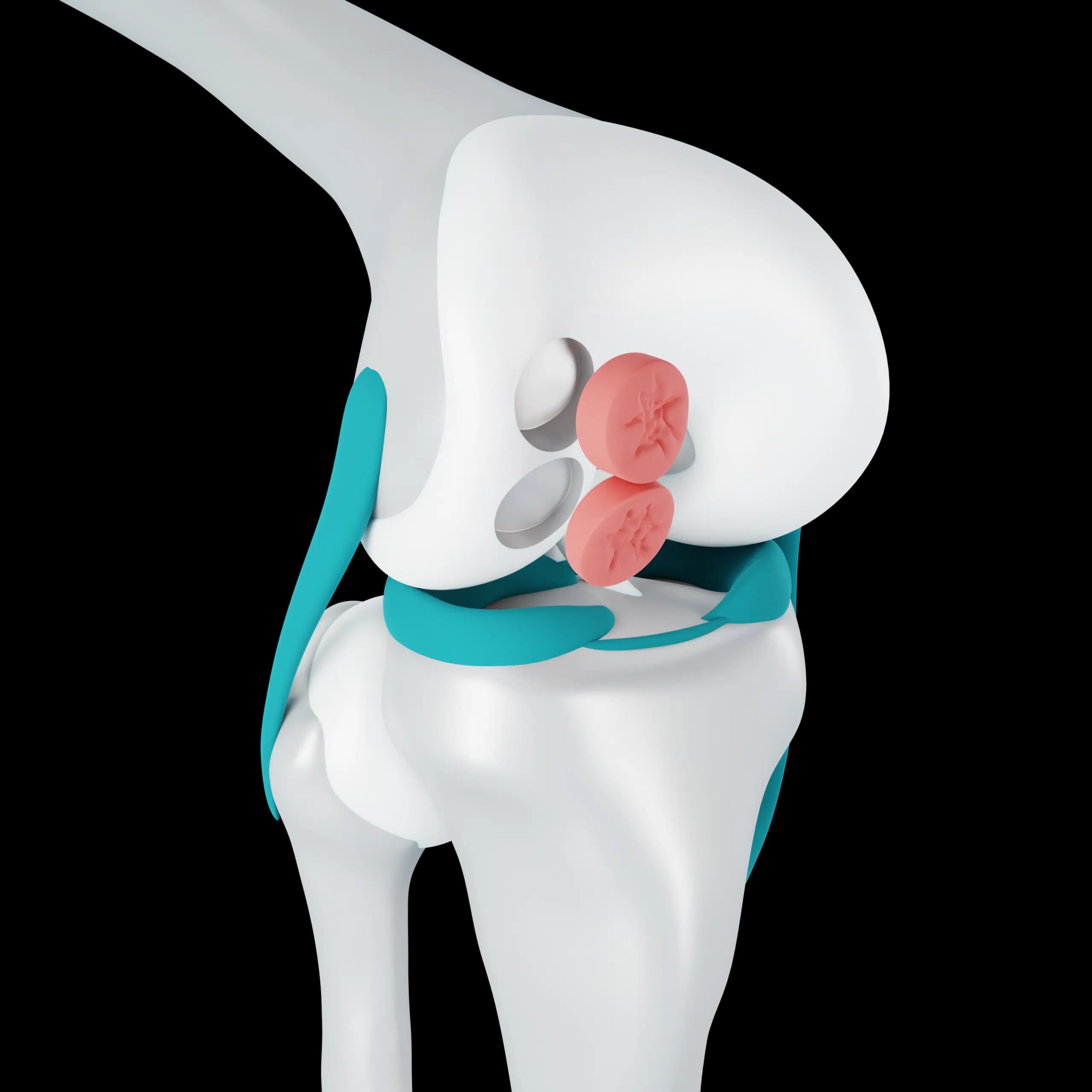
The menisci are two C-shaped cushions between the thigh bone and shin bone. When you rotate the body over a fixed foot, as in turning to the side on the padel court, changing direction in football or swivelling to get out of a car, the bones grind across the meniscus. If the meniscus has a tear with a mobile edge, that edge can be pinched or flip briefly, giving a jolt of pain and a feeling that something caught.
The pain is usually on one side of the knee, more often the inner side, along the joint line. You may notice a little swelling the next day and pain when squatting deeply.
Other possible causes
- A flap of damaged joint cartilage catching as the bones move
- A loose body, a small free fragment of cartilage or bone, causing catches in different positions
- A plica, a fold of joint lining, which tends to snap at the inner front of the knee as you bend rather than when you twist
- An unstable ACL, where the knee shifts or gives way on turning; people sometimes describe this as catching too
What to do now
- Avoid pivoting sports, deep squats and twisting on the knee for a few weeks
- Turn by moving your feet rather than twisting on a planted foot
- Ice after activity if the knee swells
- Keep strong with cycling, straight-line walking and strengthening exercises that do not provoke the catch
- Do not keep testing it to see if it still catches
When to see a knee surgeon in Doha
See a specialist if catching keeps happening for more than a couple of weeks, if the knee swells after it, or if it has locked or given way. Seek prompt care if the knee gets stuck and will not straighten. At Aman Hospital, Dr. Gelber uses specific examination tests to localise the problem and usually arranges an MRI. Many degenerative tears in older adults settle with physiotherapy. In younger, active patients with a tear that keeps catching, keyhole surgery to repair or trim the torn part may be advised, depending on the tear pattern.
Frequently asked questions
Can a meniscus tear heal by itself?
Small tears in the outer edge, which has a blood supply, can sometimes settle. Tears in the inner part rarely heal on their own, though symptoms may still calm down with rehabilitation.
Is it safe to keep playing padel?
Playing through repeated catching risks making the tear larger. It is usually advised to stop pivoting sport until the knee has been assessed.
Related